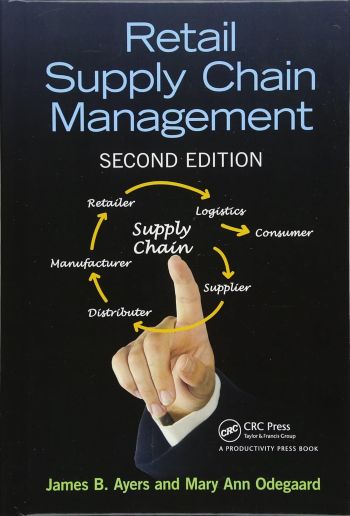
Retail Supply Chain Management: A Comprehensive Summary
TOP 10 KEY TAKEAWAYS FOR STUDENTS AND PROFESSIONALS
1. Retail Supply Chains Are Multi-Dimensional Systems Supply chains encompass physical flows, information flows, financial flows, and knowledge flows. Success requires managing all four dimensions simultaneously. Understanding that “retail is more than stores” opens perspectives on the full ecosystem from raw materials through returns.
2. Financial Metrics Drive Retail Decision-Making Master GMROI (Gross Margin Return on Investment), cash-to-cash cycle, inventory turns, and the Strategic Profit Model. These metrics directly connect supply chain decisions to profitability. A 1% improvement in costs can produce 17% profit improvement in low-margin businesses.
3. Different Products Require Different Supply Chain Strategies Functional/staple products need efficient, cost-minimized supply chains. Innovative/fashion products need responsive, flexible supply chains despite higher costs. Market mediation costs (markdowns, stockouts) justify responsive strategies for innovative products.
4. Global Sourcing Decisions Must Consider Hidden Costs The CAGE framework (Cultural, Administrative, Geographic, Economic distance) reveals true costs beyond simple price comparisons. Hidden costs include inventory carrying costs, expedited shipments, quality issues, management time, currency risks, and lost sales from longer lead times.
5. Strategic CSR Creates Shared Value Effective Corporate Social Responsibility integrates with business strategy rather than reacting to external pressure. Focus on value chain impacts and competitive context changes that benefit both society and the enterprise. Inside-out CSR (strategic) outperforms outside-in CSR (reactive).
6. Collaboration Extends Beyond Company Boundaries Stage 3 (multicompany) SCM requires forging partnerships with suppliers and customers despite being an “unnatural act.” Progressive collaboration types range from one-way data exchange to cognitive collaboration with shared strategy. Trust, transparency, and aligned incentives are essential.
7. Demand-Driven Supply Chains Outperform Forecast-Driven Ones Responding to actual demand rather than forecasts reduces inventory, obsolescence, and markdowns. Lean principles, pull systems, and Theory of Constraints help transition from forecast-driven to demand-driven operations. Flexibility becomes the ultimate competitive capability.
8. Activity Systems Create Sustainable Competitive Advantage Interconnected activities that reinforce strategic choices (like IKEA’s model) are difficult to imitate. Map choices, themes, activities, and linkages to visualize your activity system. Strong linkages between activities create systemic competitive advantage.
9. Process-Level Cost Understanding Enables Improvement Activity-Based Costing by product reveals true profitability. Progress from basic departmental costs to multicompany process costs to product-level costs. Cross-boundary process improvement delivers greater benefits than single-function optimization.
10. Omnichannel Retailing Transforms Supply Chain Requirements Customers expect seamless experiences across all channels. Supply chains must support online orders with in-store pickup, in-store browsing with online purchase, and flexible returns across channels. Inventory positioning, fulfillment, and technology integration become critical capabilities.
Introduction
“Retail Supply Chain Management” by James B. Ayers and Mary Ann Odegaard provides a comprehensive framework for understanding and managing modern retail supply chains. The book emphasizes that retail supply chains are “more than stores” and encompasses the entire network from raw materials to end consumers, including reverse flows. Organized into five sections covering 23 chapters, the text addresses strategic design, operational excellence, collaboration, financial management, and the evolving forces shaping retail supply chains in the globalized, omnichannel era.
SECTION I: THE RETAIL SUPPLY CHAIN
Chapter 1: Defining the Retail Supply Chain
Key Components and Structure
- The retail supply chain includes customers/end users, retailers, distributors, original equipment manufacturers (OEMs), first-tier suppliers, second-tier suppliers, and service providers
- The supply chain is defined as “product life-cycle processes comprising physical, information, financial, and knowledge flows whose purpose is to satisfy end-user requirements”
- Omnichannel retailing provides multiple paths to customers, allowing flexibility in research, purchase, and returns across different channels
Supply Chain Management Fundamentals
- SCM involves five critical tasks: designing for strategic advantage, implementing internal collaboration, forging partnerships, managing information, and making money from the supply chain
- Successful retailers must identify target market segments, design effective retail formats, and establish sustainable competitive advantages beyond just price
- Research shows that competitive positions built on brand, style, reliability, or availability produce better financial performance than price-based strategies alone
Value Creation and Networks
- Value chain analysis reveals that different supply chain echelons earn different profit levels based on their contributions
- Network business models (like Uber and Netflix) create significantly higher valuations than traditional asset-heavy models
- The price-to-revenue multiplier ranges from 1.8 for asset builders to 8.0 for network orchestrators, demonstrating the premium value of scalable network-based businesses
Chapter 2: Success in a Retail Business
Financial Performance Metrics
- Income statements track performance over time, showing gross sales, cost of goods sold (COGS), gross margin, operating expenses, and net profit
- Balance sheets capture financial position at a point in time, including current assets (receivables, inventory, cash), fixed assets, liabilities, and owner’s equity
- Key performance ratios include inventory turns, days of supply, receivable/payable days, cash-to-cash cycle, and various return on investment measures (ROE, ROC, working capital)
Merchandise Management
- The Strategic Profit Model breaks down ROE into return on sales, sales turnover, and assets-to-equity ratio, providing insight into profitability drivers
- Gross Margin Return on Investment (GMROI) measures how much margin is achieved for every dollar invested in inventory, calculated as gross margin percentage × sales-to-stock ratio
- Merchandise budgeting distinguishes between staple products (predictable, functional items) and fashion products (innovative items with higher uncertainty and margins)
Inventory Strategies
- Staple inventory includes cycle inventory (between orders), seasonal inventory (anticipated future demand), and safety inventory (buffer for uncertainty)
- Fashion merchandise requires closer tracking, frequent plan adjustments, and careful management of stock-to-sales ratios to avoid markdowns
- Online retailers use drop-shipping extensively to expand product variety without inventory investment, requiring strong supplier relationships and value-added services
Chapter 3: Types of Retail Supply Chain Businesses
Industry Structure and Scale
- The U.S. retail supply chain encompasses manufacturing (31-33), wholesale trade (42), retail trade (44-45), transportation/warehousing (48-49), representing 33% of businesses, 36% of establishments, and 40% of employment
- Twelve retail subsectors span from motor vehicles and parts (441) to nonstore retailers (454), each with unique operational characteristics
- The sector employs approximately 15 million people with average annual earnings around $25,000, demonstrating the scale and economic impact
Comparative Company Analysis
- Wal-Mart exemplifies the value-for-price strategy with 23-25% gross margins, emphasizing efficiency and volume
- Costco achieves extraordinary inventory turns through bulk buying and membership models, with negative cash-to-cash cycles
- Gap focuses on branded private label merchandise with 67% gross margins but faces challenges in maintaining growth
- McKesson represents the distributor model with low margins (4-6%) but high volume and strong supplier credit utilization
Global Growth Opportunities
- Organized retailing penetration varies dramatically: 85% in the United States, 20% in China, 3% in India, indicating substantial growth potential
- Strategies for revitalizing manufacturing include export incentives, value-added taxes, addressing currency overvaluation, examining hidden offshoring costs, and promoting skilled trades
Chapter 4: A Changing World—Moving toward Comparative Advantage
Economic Theory and Practice
- Comparative advantage theory suggests countries should specialize in what they produce most efficiently, even when they have absolute advantages in multiple products
- The concept of complementarity holds that outsourcing low-skill jobs creates demand for high-skill jobs in developed countries, though transitions can be disruptive
- Research shows U.S. companies adding 2.8 million overseas workers (1991-2001) also added 5.5 million domestic jobs, demonstrating complementary growth
CAGE Distance Framework
- Distance between trading partners encompasses four dimensions: Cultural (language, ethnicity, religion), Administrative (colonial ties, regulations, political systems), Geographic (physical proximity, infrastructure, climate), Economic (income levels, resource availability)
- Research quantifies trade impacts: common borders increase trade 80%, regional trading blocks 330%, colony-colonizer relationships 900%
- Physical distance decreases trade by 1.1% per 1% increase, while GDP increases trade by 0.8% per 1% increase
Hidden Costs of Globalization
- “Lean math” reveals overlooked costs: allocated overhead that won’t actually decrease, added inventory for longer distances, safety stocks, expedited shipments, warranty costs, engineering visits, management time, lost sales from stockouts, and written-off excess inventory
- Additional retail-specific costs include country reputation effects, technical reputation, currency fluctuations, tariffs, logistics, quality assurance, flexibility value, customer preferences for domestic products, and human rights compliance
Chapter 5: Corporate Social Responsibility, Sustainability, and the Retail Industry
CSR Landscape and Expectations
- Corporate Social Responsibility has evolved from reactive public relations to strategic integration with business models
- The “social contract” between business and society includes formal (laws, regulations), semiformal (informal expectations like supplier labor standards), and frontier expectations (emerging issues like obesity responsibility)
- Global Reporting Initiative (GRI) G4 guidelines establish standards for transparent CSR reporting covering economic, environmental, and social dimensions
Strategic CSR Framework
- Porter and Kramer identify three issue types: Generic (good citizenship, minimal competitive impact), Value chain impacts (affecting operations, can be mitigation or strategic transformation), Strategic philanthropy (changing competitive context)
- Responsive CSR addresses generic issues and mitigates harm; Strategic CSR reinforces strategy and shapes competitive environment
- Creating “shared value” benefits both society and enterprise, moving beyond zero-sum thinking to win-win outcomes
Implementation and Reporting
- Wal-Mart’s stakeholder engagement involved 1,750 respondents identifying priorities in environment (climate, natural resources, waste, animal welfare), social issues (economic mobility, worker dignity, community resilience)
- Boots Ltd. demonstrates CSR integration with five strategic pillars, 21 initiatives across four categories, and measurable progress (22.9% CO2 reduction, 7.5% waste reduction)
- Effective CSR requires classifying activities by type, driver (inside-out vs. outside-in), and reporting requirements to manage portfolios strategically
SECTION II: FORCES SHAPING THE RETAIL SUPPLY CHAIN ENVIRONMENT
Chapter 6: Drivers of Retail Supply Chain Change
Major Change Drivers
- Innovation drives competitive differentiation through new products, services, and business models
- Extended products include all the services and features beyond the base product (financing, warranties, training, customer support)
- Globalization opens new markets and sourcing options while adding complexity
- The flexibility imperative requires organizations to adapt quickly to changing market conditions
Management Approaches
- Process-centered management focuses on cross-functional flows rather than departmental silos
- Collaboration within and between organizations creates competitive advantages
- Stage 3 (multicompany) SCM extends integration beyond single-company boundaries to include suppliers and customers in joint planning and execution
Chapter 7: Paths to the Customer
Market Segmentation
- Different customer segments have varying needs for cost, quality, responsiveness, and service
- The “four Ps” (product, price, place, promotion) drive supply chain design decisions
- Procter & Gamble case illustrates how large manufacturers must balance brand proliferation with efficiency
Design Specifications
- Nature of demand (predictable vs. unpredictable) determines appropriate supply chain strategies
- Quality Function Deployment (QFD) translates customer requirements into supply chain capabilities
- Supply chain design must align with product characteristics and market needs
Chapter 8: Supply Chain Risk
Risk Categories
- Location/trading partner selection risks involve choosing countries and partners with appropriate capabilities and stability
- External production/logistics risks include supplier failures, transportation disruptions, natural disasters, and geopolitical events
- Internal risks encompass operational failures, quality problems, information system breakdowns, and organizational issues
Risk Management
- Diversification of suppliers and locations reduces concentration risk
- Contingency planning and business continuity processes prepare for disruptions
- Visibility and monitoring systems provide early warning of potential problems
Chapter 9: Retail Supply Chain Metrics
Measurement Framework
- Strategy-aligned metrics cascade from top-level financial measures to mid-tier operational measures to ground-level activity measures
- Service metrics track on-time delivery, order fill rates, customer satisfaction, and perfect order completion
- Operating metrics monitor inventory turns, capacity utilization, forecast accuracy, and lead times
- Financial metrics include GMROI, cash-to-cash cycle, and total supply chain cost
Implementation Challenges
- Metrics must drive desired behaviors without creating dysfunctional consequences
- Balanced scorecards prevent over-emphasis on any single dimension
- Regular review and adjustment ensure metrics remain relevant as strategies evolve
Chapter 10: Meeting the Needs of Supply Chain Decision Makers
Decision Support Requirements
- Herman Miller case demonstrates how better information enables new strategic decisions
- Proactive decision-making requires timely, accurate, and relevant data
- Information technology applications must align with actual decision-making needs
Information Assessment
- Decision-makers need different information based on their roles and time horizons
- Operational decisions require real-time transaction data
- Tactical decisions need aggregated performance data
- Strategic decisions demand market intelligence and scenario analysis capabilities
SECTION III: RETAIL STRATEGY AND SUPPLY CHAINS
Chapter 11: Product Types—Value to the Customer
Product Life Cycle Implications
- Products move through introduction, growth, maturity, and decline stages with different supply chain requirements
- Selling life cycle (market availability) differs from usage life cycle (product longevity), particularly for durable goods
- After-sales support can be the most important and profitable supply chain component for long-life products
Functional vs. Innovative Products
- Functional products are staples with predictable demand, enabling efficient supply chains focused on cost minimization
- Innovative products have uncertain demand and short life cycles, requiring responsive supply chains prioritizing availability and speed
- Market mediation costs (markdowns, stockouts, obsolescence) are higher for innovative products, requiring different strategies
Chapter 12: Businesses Inside the Business
Segmentation Strategies
- Different market segments require different supply chain designs
- “Spheres” represent distinct supply chain modules serving specific segments
- Companies contain multiple businesses internally, each needing appropriate supply chain support
Omnichannel Challenges
- Traditional supply chains must adapt to seamless customer experiences across channels
- Inventory positioning, fulfillment, and returns become more complex
- Organizations must balance channel-specific requirements with overall efficiency
Chapter 13: Activity Systems and Process Definition
Strategic Activity Systems
- IKEA example demonstrates how interconnected activities create competitive advantage
- Activity systems map choices, themes, activities, and linkages that reinforce strategy
- Strong activity systems are difficult for competitors to imitate because of systemic reinforcement
Process Definition
- Processes are high-level flows of activities that create value
- Enabling spheres translate strategy into operational processes
- Clear process definition facilitates improvement, measurement, and management
Chapter 14: Retail Supply Chain Management—Skills Required
Five Core Tasks Revisited
- Designing supply chains for strategic advantage (rare skill requiring business model innovation)
- Implementing internal collaboration (overcoming departmental silos)
- Forging partnerships (unnatural but necessary act)
- Managing supply chain information (navigating software complexity)
- Making money from supply chains (cross-boundary process improvement)
Skills Assessment
- Organizations must evaluate their current capabilities across all five tasks
- Training and development programs should address identified gaps
- Continuous learning is essential as supply chain practices evolve
SECTION IV: RETAIL SUPPLY CHAIN PROCESS IMPROVEMENT
Chapter 15: Organizing to Improve Retail Supply Chain Performance
Improvement Methodologies
- Plan-Do-Check-Act (PDCA) provides continuous improvement cycle
- Define-Measure-Analyze-Improve-Control (DMAIC) structures Six Sigma projects
- Collaborative Planning, Forecasting, and Replenishment (CPFR) enables trading partner coordination
Sales and Operations Planning (S&OP)
- S&OP integrates demand planning, supply planning, and financial planning
- Cross-functional participation ensures balanced decision-making
- Regular cadence (typically monthly) maintains alignment
West Marine Case
- As-is analysis reveals current state problems and opportunities
- To-be vision defines desired future state
- Pathway to change identifies barriers and required initiatives
Chapter 16: Collaboration with Supply Chain Partners
Partnership Fundamentals
- Core competency focus leads to outsourcing of non-core activities
- Partnership vocabulary includes purpose (why collaborate), direction (strategic vs. operational), and choice (which partners)
- Effective partnerships require trust, transparency, and aligned incentives
Organizational Structures
- Fewer but broader relationships reduce complexity while deepening integration
- Collaboration landscape includes internal (cross-functional), dyadic (two partners), and network (multiple partners) levels
- Governance mechanisms ensure partnership sustainability
Chapter 17: Demand-Driven Supply Chain
Vision and Barriers
- Demand-driven supply chains respond to actual customer demand rather than forecasts
- Current state often includes long lead times, forecast inaccuracy, and excess inventory
- Barriers include functional silos, poor visibility, and batch-oriented processes
Transformation Approaches
- Lean supply chain principles eliminate waste and improve flow
- Theory of Constraints identifies and manages system bottlenecks
- Pull systems (like kanban) replace push systems based on forecasts
- Design for commonality reduces complexity and improves responsiveness
Management Improvements
- Synchronization and fixed-interval planning create predictable rhythms
- Simplification reduces SKU proliferation and process complexity
- Sponsorship from senior leadership drives organizational change
Chapter 18: Product Tracking along Retail Supply Chains
Technology Evolution
- Bar codes enabled basic tracking but have limitations in supply chain visibility
- Radio Frequency Identification (RFID) provides real-time tracking without line-of-sight scanning
- Active RFID offers longer range and additional capabilities compared to passive tags
Applications and Benefits
- Retail applications include inventory accuracy, theft prevention, and automated checkout
- Tracking in transit provides shipment visibility and exception management
- Real-Time Location Systems (RTLS) enable precise positioning within facilities
Future Directions
- Integration with Internet of Things (IoT) expands tracking capabilities
- Advanced analytics leverage tracking data for optimization
- Privacy and data security remain important considerations
SECTION V: ACHIEVING FINANCIAL SUCCESS IN THE RETAIL SUPPLY CHAIN
Chapter 19: Understanding Supply Chain Costs
Cost Visibility Challenges
- Traditional accounting systems obscure supply chain costs across functions and partners
- Activity-Based Costing (ABC) provides more accurate product-level costs
- Information sharing between partners is difficult but necessary
Progressive Cost Analysis
- Level I-A: Starting point with basic departmental costs
- Level II-B: Department costs with capital recovery
- Level III-C: Multicompany process costs requiring partner collaboration
- Level IV-D: Activity-based costs by product enabling profitability analysis
Implementation Steps
- Set process boundaries to define scope
- Document process flows to understand activities
- Decide which cost categories to include
- Assign costs to process steps using appropriate drivers
- Analyze findings to identify improvement opportunities
Chapter 20: Barriers to Addressing Root Causes for Cost
Common Barriers
- No Focus: Projects lack clear scope, objectives, and management
- Confusion: Poor SCM understanding and inadequate education
- Motivators: Misaligned measures and unclear expectations
- Boundaries: Artificial departmental and company divisions
- Rigidity: Resistance to change and fixed mindsets
Overcoming Barriers
- Project management basics (charters, plans, resources) provide focus
- Team building creates shared understanding and commitment
- SCM promotion educates stakeholders on benefits
- Graduated approach builds capability incrementally
- Appropriate measures drive desired behaviors
- Divide and conquer breaks large problems into manageable pieces
- Multicompany participation addresses cross-boundary issues
- Mindset changes embrace new ways of thinking
Chapter 21: Multicompany Collaboration to Reduce Costs—Who, What, and How
Collaboration Types
- Type A: One-way data exchange (basic information sharing)
- Type B: Two-way data exchange (mutual information sharing)
- Type C: Cooperative collaboration (joint planning and problem-solving)
- Type D: Cognitive collaboration (shared strategy and innovation)
Cold Chain Case Study
- Frozen and refrigerated foods distribution faces unique challenges
- Root cause analysis identifies underlying problems
- Collaborative solutions reduce costs while improving service
Implementation Strategies
- Rationalize customer/supplier base to focus on key partners
- Pursue partnership opportunities matching relationship importance
- Develop appropriate governance for each collaboration type
Chapter 22: Retail Return Loops
Returns Management
- Return loops have grown in importance with omnichannel retailing
- Types of returns include defective products, wrong items, buyer’s remorse, and seasonal returns
- FedEx Supply Chain case illustrates third-party returns management
Opportunities
- Reduced returns through better product design and information
- Improved customer service through easy returns processes
- Collaboration with partners on returns prevention
- Customer feedback from returns analysis
- Material recovery and reuse
- Environmental benefits from recycling and refurbishment
- Additional revenue from refurbished product sales
- Cash-to-cash cycle improvement through faster processing
- Process standardization reducing handling costs
Chapter 23: Case Application—SeaBear/Made in Washington
Company Overview
- Three divisions: SeaBear Seafoods (smoked salmon), Gerard & Dominique (confections), Made in Washington (retail stores)
- Multiple business models within one company requiring different supply chain approaches
SCM Skills Application
- Strategic supply chain design for competitive advantage
- Product issues including sourcing, quality, and seasonality
- Internal collaboration across divisions
- Partnerships with suppliers and distributors
- Supply chain information management
- Financial challenges including working capital and profitability
Integrated Analysis
- Case demonstrates application of concepts throughout book
- Metrics evaluation reveals performance gaps
- Strategic choices determine supply chain requirements
- Real-world complexity requires balanced decision-making
Conclusion
“Retail Supply Chain Management” provides a comprehensive framework integrating strategy, operations, technology, collaboration, and financial management. The book’s lasting contribution is demonstrating that effective supply chain management creates competitive advantage through strategic design, not just operational efficiency. As retail continues evolving with technology, globalization, and changing consumer expectations, the principles of understanding costs, collaborating across boundaries, aligning strategies with execution, and creating shared value remain timeless guides for success.