Responsible Fashion Business in Practice: Sustainable Concepts and Cases across the Fashion Industry – A Comprehensive Summary
Top 10 Learnings for Students and Professionals
- Material Choices Define Impact: The environmental and social footprint of fashion primarily derives from material selection and processing. Understanding fiber production, from conventional versus organic cotton to innovative alternatives like Pinatex and Mylo, is foundational to sustainable design.
- Circularity Extends Beyond Recycling: The circular economy encompasses designing for longevity, facilitating repair, enabling resale and rental, and ensuring end-of-life recyclability. Single-use and planned obsolescence must give way to circular business models.
- Supply Chain Transparency Is Non-Negotiable: Most fashion brands lack visibility beyond tier-one suppliers, yet deeper tiers often harbor the worst environmental and social violations. Technology now enables traceability—willingness determines adoption.
- True Cost Accounting Reveals Hidden Expenses: Fast fashion’s low prices externalize costs onto workers, communities, and environments. Transparent pricing that reflects actual impacts builds consumer trust and enables sustainable business models.
- Community Encompasses All Stakeholders: Responsible business recognizes employees, supply chain workers, customers, and affected communities as stakeholders deserving equity, representation, and fair treatment—not just resources to exploit.
- Greenwashing Undermines Progress: Exaggerated, vague, or false sustainability claims reward dishonest brands over genuinely sustainable ones. Third-party certifications, transparent reporting, and honest communication about challenges build credibility.
- Sustainable Business Requires Systems Thinking: Individual initiatives fail without holistic integration. The Responsible 9 Framework demonstrates that sustainability must encompass design, operations, pricing, communication, and governance simultaneously.
- Consumer Behavior Shapes Industry: The eco-conscious consumer demands transparency, accountability, and environmental responsibility. Brands ignoring this fundamental shift risk irrelevance, while those authentically responding build lasting loyalty.
- Technology Enables, Culture Determines: Digital tools enable traceability, on-demand manufacturing, and circular systems. However, technology alone won’t create sustainable fashion—business model transformation and cultural change are equally essential.
- Sustainability Offers Competitive Advantage: Far from sacrificing profitability, genuine sustainability initiatives attract talent, reduce resource costs, build brand equity, access growing consumer segments, and future-proof businesses against regulatory and resource constraints.
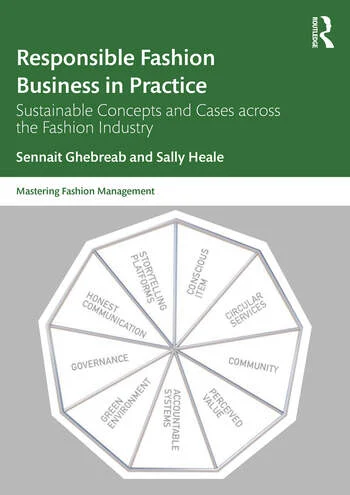
Introduction: The Responsible 9 Framework
The fashion industry faces mounting criticism for its environmental impact and exploitative labor practices. This book introduces The Responsible 9 Framework™, a comprehensive tool for analyzing and implementing sustainable business practices across all aspects of fashion operations.
The framework adapts the traditional marketing mix (7Ps) through a sustainability lens, transforming:
- Product → Conscious Item & Circular Services
- People → Community
- Price → Perceived Value
- Process → Accountable Systems
- Place → Green Environment
- Promotion → Honest Communication
- Physical Evidence → Storytelling Platforms
- Plus a new addition: Governance
The Eco-Conscious Consumer: Today’s fashion consumer has fundamentally changed. They demand transparency, accountability, and environmental responsibility. Over 75% of consumers want single-use plastics banned, and 81% want to be more sustainable. Younger generations, particularly Gen Z, lead this shift—72% refuse to work for companies lacking strong sustainability records.
This consumer evolution represents a decisive pivot from planned obsolescence toward circular systems. Rather than accepting seasonal products designed to become outdated, consumers now seek meaningful experiences, transparent pricing, credible solutions, and active participation in brand communities.
Chapter 1: Conscious Item
Key Concept: Moving from mass-produced products to consciously designed items that respect environmental and social boundaries.
Responsible Fashion Design
The chapter emphasizes that sustainable fashion begins at the design stage. Designers must consider the entire lifecycle—from material sourcing through production to end-of-life disposal or recycling. Charlotte Turner’s expert insight stresses that conscious design isn’t just about aesthetics but about making informed material choices that minimize harm.
Textiles and Fibers
Natural Fibers:
- Cotton: Conventional cotton uses extensive water and pesticides. Organic cotton eliminates synthetic chemicals, while recycled cotton reuses existing materials. Regenerative cotton goes further, actively improving soil health.
- Linen and Hemp: Both require minimal water and pesticides, making them inherently sustainable options.
- Wool: Natural and biodegradable, but animal welfare and land use concerns require attention.
- Leather: Faces scrutiny over environmental impact and ethics, driving innovation in alternatives.
- Silk: Traditional production involves killing silkworms, prompting development of peace silk alternatives.
Regenerated Fibers:
- Tencel, Modal, Bamboo: Made from wood pulp using closed-loop processes that recycle water and solvents. However, bamboo fabric production often involves harsh chemicals despite the plant’s sustainability.
Synthetic Fibers:
- Nylon and Polyester: Petroleum-based plastics that shed microfibers during washing, polluting oceans. However, innovations like ECONYL (recycled nylon from fishing nets and fabric waste) demonstrate circular solutions.
Future Alternatives:
- Pinatex: Made from pineapple leaf fibers, a waste product from harvest
- Orange Fiber: Created from citrus juice industry byproducts
- Mylo: Mycelium-based leather alternative grown in weeks
- Aquafil’s ECONYL: Regenerated nylon from waste materials
Dyes and Color
Traditional textile dyeing ranks among the most polluting industrial processes, consuming vast water quantities and releasing toxic chemicals. Karen Spurgin’s insight highlights that approximately 20% of global industrial water pollution comes from textile treatment and dyeing.
Sustainable Alternatives:
- Plant-based natural dyes from botanical sources
- Companies like Archroma developing safer synthetic alternatives
- Colorifix using biology to produce dyes through fermentation
- Post Carbon Lab exploring bacterial pigments
Slow Fashion Movement
Jeffrey Heiligers emphasizes that slow fashion represents a philosophical shift toward quality, longevity, and mindful consumption. It champions timeless design over fleeting trends, durable construction over disposability, and transparent production over obscured supply chains.
Key Takeaways:
- Material selection is the foundation of sustainable fashion
- Natural doesn’t always mean sustainable—production processes matter
- Innovation in bio-based materials offers promising alternatives
- Closed-loop manufacturing minimizes waste and pollution
- Dyes represent a critical but often overlooked environmental concern
- Slow fashion principles challenge the industry’s growth-at-all-costs model
Chapter 2: Circular Services
Key Concept: Extending product lifecycles through resale, rental, repair, and innovative business models that keep materials in use.
The Circular Economy Imperative
The traditional linear model (take-make-dispose) has created environmental catastrophe. The circular economy offers an alternative: designing out waste, keeping products in use longer, and regenerating natural systems. Fashion brands now recognize that responsibility extends beyond the point of sale.
Turning Waste into New Items
Deadstock Transformation: Brands like Stella McCartney and Ahluwalia convert unused fabric into new collections. Nona Source, LVMH’s deadstock marketplace, connects designers with luxury fabric remnants, preventing waste while maintaining quality standards.
Plastic to Fashion: Brands increasingly use recycled ocean plastics and PET bottles. While this addresses waste, critics note it doesn’t solve the fundamental problem of plastic production and microfiber shedding.
Extending Garment Lifespan
Aftercare Education: Brands provide washing, storage, and maintenance guidance to maximize product longevity. Proper care dramatically extends garment life, reducing replacement frequency.
Repair Services:
- Patagonia’s Worn Wear program repairs products for free or minimal cost, embodying their “buy less, demand more” philosophy
- Arc’teryx ReBird offers expert repairs maintaining technical performance
- Mulberry provides lifetime repairs for leather goods
- These services strengthen customer relationships while reducing waste
RÆBURN DESIGN Case Study:
- RÆMADE: Upcycled military surplus and deadstock
- RÆDUCED: Responsible manufacturing minimizing waste
- RÆCYCLED: Closed-loop system accepting returns for recycling This holistic approach demonstrates circular principles across the business.
Buy-Back and Take-Back Schemes
Brands increasingly reclaim products at end-of-life for recycling or resale. H&M’s garment collection program, though criticized for scale limitations, normalizes the concept. More targeted programs from brands like Napapijri (Circular Series designed for disassembly) show greater promise.
Preserving Archives
Professor Andrew Groves explains that fashion archives serve multiple purposes: historical documentation, design inspiration, and sustainability resources. The Westminster Menswear Archive demonstrates how preserved garments inform contemporary sustainable design practices, offering alternatives to constant newness.
The Second-Hand Market
Explosive Growth: The resale market is growing 11 times faster than traditional retail. Boston Consulting Group research shows consumers across demographics embrace pre-owned fashion, driven by sustainability concerns and value-seeking.
Platform Examples:
- Vestiaire Collective and The RealReal: Luxury authentication services building trust
- Depop: Social shopping for younger consumers
- eBay: Democratized resale long before sustainability trends
China’s Market: Gemma A. Williams notes that Chinese consumers, traditionally favoring newness, increasingly embrace luxury resale as attitudes shift toward sustainability and smart consumption.
The Sharing Economy (Rental)
Rental Models:
- Rent the Runway: Subscription-based access to designer fashion
- By Rotation: Peer-to-peer dress sharing
- Zalando’s partnerships: Major retailers entering rental space
Rental challenges traditional ownership models, offering variety without accumulation. However, questions remain about laundering impacts and whether rental truly reduces overall consumption or simply enables more wearing occasions.
Consumer as Investor
Some brands explore equity crowdfunding, giving customers ownership stakes. This deepens engagement beyond transactions, creating communities genuinely invested in brand success and sustainability commitments.
The New Conscious Priority
Laura Coppen and Daniel Newton from Zalando emphasize that circularity must become embedded in business models, not bolt-on initiatives. Their work scaling recommerce demonstrates that circular services can drive profitable growth while reducing environmental impact.
Key Takeaways:
- Circular services extend value beyond initial purchase
- Repair and maintenance challenge disposability culture
- Resale markets are mainstream, not fringe
- Rental offers access over ownership
- Brands must design for circularity from inception
- Customer engagement deepens through circular touchpoints
- Technology enables tracking and logistics for circular systems
Chapter 3: Community
Key Concept: Fashion businesses must recognize employees, workers, and customers as interconnected communities deserving equity, inclusion, and respect.
Corporate Social Responsibility Evolution
Craig Crawford’s insight emphasizes that authentic CSR transcends compliance, embedding social and environmental responsibility into core operations. The chapter introduces the CITREC Framework:
- Community engagement
- Inclusion and diversity
- Transparency
- Responsibility throughout supply chains
- Ethical standards
- Continuous improvement
This framework moves beyond traditional shareholder primacy toward stakeholder capitalism, recognizing that businesses impact employees, communities, and environments.
Mission Statements as Commitments
Strong mission statements articulate values and commitments. Patagonia’s “We’re in business to save our home planet” exemplifies mission-driven business. Such statements guide decision-making and attract aligned talent and customers.
Diversity and Inclusion
Workplace Diversity: Mathew Dixon explains that diverse teams drive innovation, better decision-making, and financial performance. Yet fashion—despite selling products globally—often lacks representative leadership and design teams.
Representation Challenges:
- Racial and ethnic minorities underrepresented in design and executive roles
- Gender pay gaps persist despite female-majority workforce
- LGBTQ+ individuals face discrimination
- Disability representation remains minimal
Brand Examples:
- Burberry: Commitments to diverse hiring and inclusive culture
- Nike: Programs supporting underrepresented communities in sports and business
- Reformation: Publishing diversity data demonstrating accountability
Equal Representation in Marketing
Lisa Nan highlights that representation matters profoundly. When consumers see themselves reflected in campaigns, brand affinity increases. Conversely, tokenism or stereotyping damages relationships and perpetuates harm.
Successful Approaches:
- Casting diverse models authentically, not just performatively
- Consulting communities rather than appropriating cultures
- Adaptive fashion for people with disabilities
- Size inclusivity beyond token extended ranges
Volunteer Programs and Community Engagement
Brands like Timberland and Patagonia offer paid volunteer time for environmental causes. This signals genuine commitment while building team cohesion around shared values. Such programs attract purpose-driven talent willing to accept lower compensation for meaningful work.
The Role of Education
Liliana Sanguino Ramirez stresses that fashion education must evolve, integrating sustainability, ethics, and social justice throughout curricula. Future professionals need skills analyzing supply chains, understanding material impacts, and designing equitable systems—not just creating aesthetically pleasing products.
Key Takeaways:
- People are stakeholders, not just resources or consumers
- Diversity drives innovation and market relevance
- Authentic representation requires ongoing commitment, not campaigns
- Fair wages and safe conditions are non-negotiable
- Community extends beyond employees to supply chains
- Education shapes future industry practices
- Transparency builds trust and accountability
Chapter 4: Perceived Value
Key Concept: Price must reflect true costs—environmental, social, and economic—while transparently communicating value to consumers.
Transparent Pricing
Traditional fashion pricing obscures costs, with markups ranging from 200% to 1000%. Consumers increasingly question why garments cost what they do, particularly when worker exploitation and environmental destruction subsidize low prices.
Myrto Angelidou’s Insight: Transparent pricing builds trust. When brands explain cost breakdowns—materials, labor, transportation, margins—customers understand value beyond price tags. This honesty differentiates brands in crowded markets.
The True Cost Challenge
Fast fashion’s low prices externalize costs onto workers, communities, and environments. A £5 t-shirt’s real price includes:
- Poverty wages for garment workers
- Polluted water sources near factories
- Carbon emissions from production and shipping
- Landfill costs when quickly discarded
Sustainable Pricing Approaches:
- Patagonia: Premium pricing reflects quality, durability, and fair practices
- Reformation: Publishes sustainability metrics for each product
- Pangaia: Scientific material innovation justifies higher prices
- Stella McCartney: Luxury positioning emphasizes ethical sourcing
Connecting with Credible Causes
Lucy Litwack (Coco de Mer) explains that cause alignment must be authentic, not opportunistic. Customers detect performative activism. Successful partnerships share values genuinely, with long-term commitments rather than one-off campaigns.
Examples:
- Kenzo and WWF: Long-term endangered species protection
- Michael Kors and UN World Food Programme: Addressing hunger
- Ralph Lauren and cancer research: Personal founder connection
- Bottletop: Foundation supporting marginalized communities
Charitable Donations and Give-Back Models
Some brands donate portions of profits to aligned causes. While generous, Erica Charles warns against using charity to excuse unsustainable practices. Genuine responsibility means addressing root causes—preventing harm rather than donating to repair it.
Considerations:
- Transparency about donation amounts and recipients
- Long-term partnerships versus reactive giving
- Ensuring causes genuinely align with brand impacts
- Avoiding “conscience washing” where charity masks problems
Value Beyond Price
Consumers increasingly define value holistically:
- Durability and cost-per-wear
- Ethical production providing living wages
- Environmental impact minimization
- Brand values alignment
- Emotional connection and storytelling
- Community belonging
This shift challenges race-to-bottom pricing strategies, rewarding brands offering genuine value.
Key Takeaways:
- Transparent pricing builds consumer trust
- Low prices often hide exploitative and environmental costs
- Premium pricing requires justification through quality and ethics
- Cause partnerships must be authentic and sustained
- Value encompasses more than monetary price
- Consumers will pay more for genuine sustainability
- Pricing strategies signal brand values and commitments
Chapter 5: Accountable Systems
Key Concept: Fashion supply chains must become transparent, traceable, and responsible across all tiers—from raw materials to consumer delivery.
Supply Chain Complexity
Fashion supply chains involve numerous tiers: fiber production, spinning, weaving, dyeing, cutting, sewing, finishing, transportation, and retail. Each stage typically involves different companies, often across continents. This complexity obscures accountability.
Archana Chandrasekar’s Insight: Most brands know their tier-one suppliers (final assembly) but lack visibility into deeper tiers where many impacts occur. Raw material production and fabric processing often involve the worst environmental and social violations.
Upstream and Downstream Challenges
Upstream (pre-production): Resource extraction, agriculture, and manufacturing processes often cause environmental degradation and labor exploitation.
Downstream (post-production): Transportation, packaging, retail operations, and disposal create additional impacts.
Accountable systems require managing both directions.
Unacceptable Practices Exposed
The 2013 Rana Plaza collapse killing 1,134 garment workers exemplified system failures. Since then, movements like Fashion Revolution demand transparency through questions: “Who made my clothes?” Brands must answer with verifiable information.
Carbon Footprint and Climate Action
Emissions Accounting:
- Scope 1: Direct operations
- Scope 2: Purchased energy
- Scope 3: Supply chain (typically 90%+ of fashion brand emissions)
Carbon Strategies:
- Carbon Neutral: Offsetting emissions through projects elsewhere
- Carbon Negative: Removing more carbon than emitted
- Science-Based Targets: Aligning reduction goals with climate science
Critics like Veronica Bates Kassatly warn that offsetting can enable continued pollution rather than driving real reduction.
Sustainable Transportation
Fashion’s global supply chains create massive shipping emissions. Solutions include:
- Optimizing routes and consolidating shipments
- Shifting from air to sea freight (lower emissions)
- Local and regional production reducing distances
- Electric vehicle adoption for last-mile delivery
Information Chain Innovation
James Clark emphasizes that digital technologies enable unprecedented supply chain transparency:
QR Codes: Products carry scannable codes revealing origin, materials, factory conditions, and environmental impact.
Blockchain: Immutable records track products through supply chains, verifying authenticity and ethical claims.
Examples:
- Reformation’s sustainability metrics for each item
- Pangaia’s traceability programs
- Stella McCartney’s supplier transparency
On-Demand Manufacturing
Joanne Yulan Jong explains that on-demand production eliminates overproduction waste. Instead of forecasting demand and manufacturing speculatively, brands produce items only after orders. This dramatically reduces unsold inventory—currently 30%+ of production for many brands.
Challenges:
- Longer delivery times
- Higher per-unit costs
- Requires consumer patience
Benefits:
- Near-zero waste
- Reduced working capital
- Customization opportunities
Packaging Revolution
Fashion packaging generates enormous waste. A single online order might include polybags, boxes, tissue paper, filler, and shipping materials—much discarded immediately.
Sustainable Solutions:
- Biodegradable materials: Mushroom-based packaging, seaweed films
- Reusable packaging: Customers return containers for refills or next orders
- Packaging-free: Garments shipped in themselves (folded, secured without additional materials)
- Right-sizing: Eliminating excess packaging and void fill
Brand Examples:
- Notpla: Seaweed packaging that decomposes naturally
- Boox: Reusable shipping boxes circulating between retailers and customers
- Nordstrom and Selfridges: Eliminating single-use plastics
- Avery Dennison: Amy Lee’s work developing sustainable labeling and tagging solutions
Key Takeaways:
- Supply chain transparency is foundational to accountability
- Most brands lack visibility beyond immediate suppliers
- Carbon accounting must include full scope 3 emissions
- Transportation choices significantly impact environmental footprint
- Technology enables traceability previously impossible
- On-demand production prevents overproduction waste
- Packaging offers quick wins for waste reduction
- Accountability requires continuous measurement and improvement
Chapter 6: Green Environment
Key Concept: Physical retail spaces must embody sustainability principles through design, materials, energy, and operational practices.
The Store as Sustainability Statement
Retail environments communicate brand values tangibly. Stores built from sustainable materials, powered by renewable energy, and designed for longevity demonstrate genuine commitment beyond marketing claims.
The 5 R’s Hierarchy
A framework for sustainable decision-making:
- Refuse: Reject unnecessary materials and practices
- Reduce: Minimize resource consumption
- Reuse: Extend material lifespans through multiple uses
- Recycle: Process materials into new products
- Rot: Compost biodegradable materials
This hierarchy prioritizes prevention over end-of-pipe solutions.
Living Interiors
Biophilic Design: Incorporating plants, natural materials, and nature connections into retail spaces improves air quality, enhances customer wellbeing, and demonstrates environmental values.
Example: Stella McCartney stores feature living walls, recycled materials, and FSC-certified wood, creating spaces that heal rather than harm.
Sustainable Store Components
Clothing Hangers: Traditional plastic hangers contribute massive waste. Alternatives include:
- FSC-certified wood
- Recycled cardboard
- Rental programs where hangers return to suppliers
Mannequins: Conventional fiberglass mannequins are resource-intensive. Innovations include recycled materials, biodegradable options, and modular designs enabling repairs rather than replacement.
Lighting: LEDs reduce energy consumption by 75%+ compared to traditional bulbs. Smart systems adjust based on occupancy and natural light, further reducing usage.
Renewable Energy: Solar panels, wind power purchases, and on-site generation eliminate fossil fuel dependence. Ralph Lauren’s flagship stores showcase solar integration.
Juliet Russell and Philip Mak (Stella McCartney)
Their insights emphasize that sustainability must integrate throughout store design and operations:
- Specifying low-impact materials for construction and fixtures
- Minimizing water usage in operations
- Creating circular take-back systems in-store
- Training staff on sustainability to educate customers
- Regular auditing to identify improvement opportunities
Patsy Perry’s Research
Academic perspective highlights that consumers increasingly evaluate brands based on retail environmental performance. Stores using renewable energy, minimizing waste, and demonstrating circular principles strengthen brand perception and differentiation.
Key Takeaways:
- Retail spaces must embody stated sustainability values
- The 5 R’s hierarchy guides sustainable decision-making
- Every store component offers sustainability opportunities
- Renewable energy eliminates operational emissions
- Biophilic design benefits people and planet
- Staff training ensures sustainability communication
- Physical spaces offer tangible proof of commitments
Chapter 7: Governance
Key Concept: No brand operates in isolation—organizational networks provide guidance, certification, standards, and accountability for sustainable transformation.
Supportive Organizations
Global Bodies:
- United Nations: Sustainable Development Goals provide universal framework
- Global Fashion Agenda: Convenes industry for collaborative solutions
- Ellen MacArthur Foundation: Circular economy thought leadership
- Fashion Pact: CEO-level commitment group addressing climate, biodiversity, and oceans
Regional Organizations:
- British Fashion Council’s Institute of Positive Fashion: UK industry collaboration
- Fashion Roundtable: Policy advocacy for sustainable practices
- Sustainable Fashion Forum: Education and networking
Specialist Groups:
- Textile Exchange: Fiber and material standards
- Sustainable Angle: Innovation showcase and networking
- Fashion for Good: Innovation platform connecting brands and startups
Certification Companies
Third-party verification builds consumer trust in sustainability claims:
B Corp Certification: Comprehensive assessment of social and environmental performance, accountability, and transparency. Certified brands like Patagonia and Reformation meet rigorous standards across operations.
Material Certifications:
- Fairtrade: Ensuring fair wages and safe conditions
- Global Organic Textile Standard (GOTS): Organic fiber verification
- Forest Stewardship Council (FSC): Responsible forestry
- Cradle to Cradle: Material health and circularity
- Bluesign: Chemical safety in production
Positive Luxury’s Butterfly Mark: Recognizes brands demonstrating quantified positive impact across environmental and social metrics.
Allbirds Case Study
Hana Kajimura (Head of Sustainability) explains Allbirds’ governance approach:
- B Corp certified since founding
- Publishing carbon footprint for every product
- Open-sourcing sustainable innovations for industry adoption
- Setting science-based targets aligned with 1.5°C pathway
- Transparent reporting on progress and setbacks
This demonstrates how brands use external frameworks for accountability and continuous improvement.
Activist Groups
Organizations driving systemic change through advocacy and action:
Fashion Revolution: Post-Rana Plaza movement demanding transparency through “Who Made My Clothes?” campaigns. Annual Fashion Transparency Index ranks brands.
Extinction Rebellion: Direct action highlighting climate crisis urgency, targeting brands and fashion weeks.
Greenpeace: Detox campaigns pressuring brands to eliminate hazardous chemicals.
Clean Clothes Campaign: Labor rights advocacy throughout global supply chains.
The Slow Fashion Movement
Philosophical alternative to fast fashion emphasizing:
- Quality and durability over disposability
- Timeless design over trend chasing
- Fair labor practices
- Environmental responsibility
- Mindful consumption
Organizations like The Slow Factory and Fashion Takes Action educate and advocate for these principles.
M. Fernanda Hernandez Franco’s Insight
As a sustainability leader for major Italian retail, she emphasizes that governance structures—both internal and external—provide essential frameworks. Without clear standards, measurement systems, and accountability mechanisms, sustainability claims remain unverifiable. Multi-stakeholder collaboration through these organizations accelerates progress no single brand could achieve alone.
Key Takeaways:
- Governance structures provide accountability frameworks
- Certifications offer third-party verification of claims
- Industry collaboration accelerates sustainable transformation
- Activist groups drive urgency and transparency
- Standards enable measurement and comparison
- Open-sourcing innovations benefits entire industry
- Multiple organizations serve different functions in ecosystem
- External accountability prevents greenwashing
Chapter 8: Honest Communication
Key Concept: Marketing and communication must shift from persuasion to transparency, from manipulation to honesty, and from greenwashing to authentic sustainable messaging.
The Greenwashing Challenge
Greenwashing occurs when brands exaggerate, mislead, or falsely claim environmental benefits. As sustainability becomes competitive advantage, dishonest communication proliferates.
Common Tactics:
- Vague terminology (“eco-friendly,” “conscious”) without specifics
- Hidden trade-offs (highlighting one green attribute while ignoring overall impact)
- Irrelevant claims (promoting legally required practices as voluntary achievements)
- False certifications or misleading imagery
- Outright lies about materials, production, or impact
Consequences: Erodes consumer trust, rewards dishonest brands over genuinely sustainable ones, and delays necessary industry transformation.
Green Marketing Evolution
Jacqueline Ottman’s seven strategies for green marketing emphasize authenticity:
- Know your customer’s environmental values
- Empower consumers with information
- Build credibility through transparency
- Reassure through certifications and third-party validation
- Consider product life cycle
- Price fairly and explain cost structures
- Practice what you preach (eliminate hypocrisy)
Traditional marketing prioritized persuasion; sustainable marketing prioritizes education and empowerment.
AIDA Model Reconsidered
Martin Deal questions whether the traditional AIDA (Attention, Interest, Desire, Action) model remains relevant. Sustainable communication requires different approach:
- Awareness of problems and solutions
- Understanding of complexity and trade-offs
- Values alignment rather than desire manipulation
- Informed action based on genuine needs
This respects consumer intelligence rather than exploiting psychological triggers.
Veronica Bates Kassatly’s Warning
Independent analyst Kassatly cautions against sustainability metrics that enable greenwashing rather than driving improvement. Many brands publish impressive-sounding data that, upon examination, reveals minimal progress or misleading baselines. True transparency requires uncomfortable honesty about shortcomings and realistic timelines for improvement.
Responsible Consumption Communication
Rather than encouraging consumption, sustainable brands increasingly promote mindful purchasing:
- “Buy less, choose well” (Vivienne Westwood)
- Patagonia’s “Don’t Buy This Jacket” campaign
- REI’s #OptOutside closing stores on Black Friday
This counterintuitive approach builds deeper brand loyalty by aligning with consumer values over short-term sales.
Equal Representation in Marketing
Darren Black (fashion photographer) emphasizes that inclusive representation must extend beyond tokenism:
- Authentic casting reflecting genuine diversity
- Behind-the-camera diversity in creative teams
- Avoiding stereotypes and cultural appropriation
- Disability inclusion
- Body diversity beyond plus-size add-ons
- Age representation
Brand Examples:
- Savage X Fenty: Revolutionary runway diversity
- Tory Burch: Size-inclusive campaigns
- Allbirds: Diverse casting reflecting real customers
Influencer Marketing Evolution
Giorgia Pagliuca (“green influencer”) explains that influencer marketing faces sustainability reckoning. Traditional influence promoted consumption; sustainable influence promotes education, values, and mindful choices.
Authentic Approaches:
- Long-term brand partnerships (not one-off #ads)
- Transparent disclosure of relationships
- Focus on education over promotion
- #SponsoredByValues rather than just products
- Challenging followers to consume less, not more
Brand Activism and Cause Marketing
Brands increasingly take stands on social and environmental issues. Successful activism requires:
- Genuine connection to brand operations
- Long-term commitment (not trend-riding)
- Internal alignment (practices matching rhetoric)
- Willingness to accept backlash
Examples:
- Patagonia: Environmental lawsuits and activism
- Ben & Jerry’s: Social justice advocacy
- The North Face: Public lands protection
Sara Vaughan (sustainability advisor) warns that cause marketing without operational change constitutes greenwashing. Activism must accompany authentic transformation.
Events and Promotional Materials
Even marketing materials and events must embody sustainability:
- Digital-first campaigns reducing print waste
- Sustainable materials for essential physical materials
- Virtual events reducing travel emissions
- Experiential activations creating memories over stuff
Key Takeaways:
- Greenwashing undermines entire sustainability movement
- Transparency and honesty build lasting customer relationships
- Traditional persuasion techniques conflict with sustainable values
- Representation and inclusion are non-negotiable
- Influencer partnerships must align with authentic values
- Brand activism requires operational integrity
- Responsible communication sometimes means discouraging purchase
- Metrics must drive improvement, not enable greenwashing
- Physical marketing materials need sustainability consideration
Chapter 9: Storytelling Platforms
Key Concept: Physical and digital spaces must authentically communicate brand values, educate consumers, and build communities around sustainability commitments.
Storytelling Retail Spaces
Nick Pye (Mangrove Consulting) explains that retail spaces have evolved from transaction locations to experience destinations. Sustainable brands use physical spaces to communicate values tangibly, educate customers, and build communities.
Successful Elements:
- Material transparency (FSC wood, recycled content visible)
- Educational signage explaining sustainability initiatives
- Interactive elements demonstrating circular principles
- Community spaces for events and workshops
- Living plants and biophilic design
- Minimal packaging with refill stations
Examples:
- Lululemon: Community fitness events and education spaces
- Public Lands: REI’s sustainable outdoor retail concept
- United by Blue: Ocean cleanup commitments visible in-store
aaa/unbranded® Case Study
Vittorio Cosma and Mario Innocente describe their experimental retail space challenging fashion conventions:
- No branding on products (anti-logo movement)
- Curated selection emphasizing craftsmanship
- Storytelling about makers and materials
- Educational events about sustainable fashion
- Community building over transactions
This approach demonstrates retail as cultural space rather than purely commercial.
Local Stores and Community Connection
Rae Sims (WerkHaus Margate) emphasizes independent retail’s role in sustainable fashion ecosystems. Local stores:
- Support regional designers and makers
- Build community through personal relationships
- Offer alternatives to corporate retail
- Enable circular services (repairs, alterations)
- Reduce shipping emissions through local sourcing
Inclusive Retail Behavior
Genuine inclusivity requires:
- Accessible store design for people with disabilities
- Size ranges available in physical stores, not just online
- Staff training on inclusive language and behavior
- Representation in store imagery and marketing
- Creating welcoming spaces for all customers
Many brands market inclusivity while store experiences contradict claims.
Digital Storytelling Platforms
Manifestos: Many sustainable brands publish detailed manifestos explaining philosophies and commitments.
Patagonia’s Example:
- Build the best product
- Cause no unnecessary harm
- Use business to protect nature
- Not bound by convention
These statements guide operations and communicate priorities clearly.
Commitments and Transparency Reports
Leading brands publish detailed sustainability reports:
- Stella McCartney: Annual Environmental Profit & Loss
- Reformation: RefScale measuring environmental impact
- Allbirds: Carbon footprint for every product
- Zalando: Circularity commitments and progress updates
Samara Croci (podcast expert) emphasizes that transparency builds trust even when revealing imperfections. Consumers appreciate honesty about challenges over false perfection.
Live Streaming and Virtual Experiences
COVID-19 accelerated digital storytelling:
- Virtual fashion shows reducing travel emissions
- Live-streamed maker workshops
- Behind-the-scenes supply chain tours
- Digital showrooms for buyers
These maintain connection while reducing physical impacts.
Podcasting as Education Platform
Podcasts enable deep-dive sustainability conversations:
- Long-form discussions of complex topics
- Expert interviews providing authority
- Accessible format for commuting/multitasking audiences
- Building intimate brand relationships
Examples:
- Patagonia’s podcasts on environmental issues
- Individual designer podcasts explaining processes
- Independent podcasts reviewing brand sustainability
Samara Croci explains that podcasting’s intimacy builds trust differently than visual media, creating emotional connections through voice and storytelling.
Key Takeaways:
- Physical spaces must embody stated values
- Storytelling builds understanding and community
- Local retail offers sustainable alternatives to corporate chains
- Inclusive spaces require intentional design and training
- Digital platforms enable transparency and education
- Manifestos guide internal decisions and external communication
- Transparency reports demonstrate accountability
- Podcasts create intimate brand relationships
- Virtual experiences reduce physical impacts
- Storytelling platforms work synergistically across channels
Conclusion: The Path Forward
Nicola Giuggioli (ECO-AGE) provides concluding perspective on fashion’s sustainable transformation:
Sustainability as Core Focus
Sustainability can no longer remain peripheral—it must become central to business strategy, not a department or bolt-on initiative. Successful brands integrate environmental and social responsibility throughout operations, from design through disposal.
Transparency and Traceability
The future demands radical transparency. Consumers, regulators, and investors require verifiable information about supply chains, materials, and impacts. Technology enables this visibility; willingness determines adoption.
Circular Economy Imperative
Linear take-make-dispose models are incompatible with planetary boundaries. Fashion must transition to circular systems where:
- Products are designed for longevity and recyclability
- Materials circulate indefinitely through reuse and recycling
- Business models value access and service over ownership
- Waste becomes feedstock for new production
Technology and Resources
Innovation offers solutions:
- Bio-based materials replacing synthetics
- Digital technologies enabling traceability
- AI optimizing production to reduce waste
- Blockchain verifying sustainability claims
- Recycling technologies improving quality and efficiency
However, technology alone won’t suffice—business model and cultural transformation are equally essential.
Changing Consumer Behavior
Ultimate success requires consumer participation:
- Buying less but better
- Caring for garments longer
- Participating in circular services
- Demanding transparency
- Accepting higher prices reflecting true costs
Brands must educate and facilitate these behaviors rather than exploiting psychological weaknesses to drive consumption.
The Responsible 9 Framework Integration
The framework provides systematic approach for analyzing and improving every business aspect:
- Conscious Item: Sustainable design and materials
- Circular Services: Extending product lifecycles
- Community: People-centered business practices
- Perceived Value: Transparent, fair pricing
- Accountable Systems: Supply chain responsibility
- Green Environment: Sustainable retail spaces
- Governance: External accountability structures
- Honest Communication: Authentic marketing
- Storytelling Platforms: Values-aligned engagement
Used holistically, this framework enables comprehensive sustainable transformation rather than piecemeal initiatives.
Top 10 Learnings for Students and Professionals
- Material Choices Define Impact: The environmental and social footprint of fashion primarily derives from material selection and processing. Understanding fiber production, from conventional versus organic cotton to innovative alternatives like Pinatex and Mylo, is foundational to sustainable design.
- Circularity Extends Beyond Recycling: The circular economy encompasses designing for longevity, facilitating repair, enabling resale and rental, and ensuring end-of-life recyclability. Single-use and planned obsolescence must give way to circular business models.
- Supply Chain Transparency Is Non-Negotiable: Most fashion brands lack visibility beyond tier-one suppliers, yet deeper tiers often harbor the worst environmental and social violations. Technology now enables traceability—willingness determines adoption.
- True Cost Accounting Reveals Hidden Expenses: Fast fashion’s low prices externalize costs onto workers, communities, and environments. Transparent pricing that reflects actual impacts builds consumer trust and enables sustainable business models.
- Community Encompasses All Stakeholders: Responsible business recognizes employees, supply chain workers, customers, and affected communities as stakeholders deserving equity, representation, and fair treatment—not just resources to exploit.
- Greenwashing Undermines Progress: Exaggerated, vague, or false sustainability claims reward dishonest brands over genuinely sustainable ones. Third-party certifications, transparent reporting, and honest communication about challenges build credibility.
- Sustainable Business Requires Systems Thinking: Individual initiatives fail without holistic integration. The Responsible 9 Framework demonstrates that sustainability must encompass design, operations, pricing, communication, and governance simultaneously.
- Consumer Behavior Shapes Industry: The eco-conscious consumer demands transparency, accountability, and environmental responsibility. Brands ignoring this fundamental shift risk irrelevance, while those authentically responding build lasting loyalty.
- Technology Enables, Culture Determines: Digital tools enable traceability, on-demand manufacturing, and circular systems. However, technology alone won’t create sustainable fashion—business model transformation and cultural change are equally essential.
- Sustainability Offers Competitive Advantage: Far from sacrificing profitability, genuine sustainability initiatives attract talent, reduce resource costs, build brand equity, access growing consumer segments, and future-proof businesses against regulatory and resource constraints.