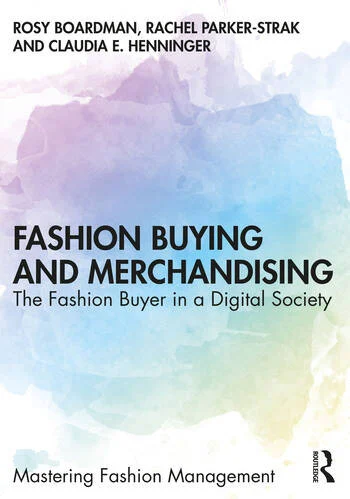
Fashion Buying and Merchandising: The Fashion Buyer in a Digital Society – A Comprehensive Summary
By redoyremianzTop 10 Key Takeaways for Students and Professionals
- Master the 7Rs Framework: Success in fashion buying and merchandising requires delivering the right product at the right price, in the right quantity, at the right time, to the right place, for the right customer, in the right way—with the seventh “R” (right way) emphasizing ethical and sustainable practices that are increasingly non-negotiable in modern fashion business.
- Embrace Technology as Essential, Not Optional: Contemporary buyers and merchandisers must be proficient in PLM systems, CAD software, data analytics, and emerging technologies like AI, AR/VR, and blockchain. These tools are fundamental to competitive advantage, enabling better decisions, faster processes, and reduced environmental impact through digital sampling and virtual prototyping.
- Understand the Fast Fashion to Sustainability Paradox: While fast fashion dominates with compressed timelines (weeks instead of months) and constant newness (50-100 microseasons annually), the industry simultaneously faces urgent demands for sustainability. Successful professionals will balance speed-to-market with responsible practices, finding innovative solutions that meet both consumer demand for newness and environmental imperatives.
- Develop Omnichannel Thinking: The distinction between online and physical retail is increasingly meaningless—consumers expect seamless experiences across all touchpoints. Professionals must plan ranges, allocate stock, analyze performance, and manage fulfillment with integrated omnichannel strategies, understanding cross-channel behaviors like
- Build Strategic Supplier Relationships: Sourcing is no longer just about finding the lowest price—it requires developing long-term partnerships with suppliers who share values around quality, ethics, sustainability, and innovation. Understanding global sourcing landscapes, negotiation beyond price, and supply chain transparency is critical, as is recognizing the trade-offs between nearshoring and offshoring.
- Master Data-Driven Decision Making: Modern buying and merchandising relies heavily on analyzing sales data, customer behavior, market trends, and performance metrics. Professionals must interpret WSSI reports, sell-through analysis, markdown impacts, and various KPIs to make informed decisions about range development, allocation, replenishment, and promotional strategies while maintaining profitability.
- Know Your Customer Deeply: Success requires understanding not just demographic data but psychographic profiles, generational differences (Baby Boomers through Gen Alpha), cultural nuances for international markets, and evolving values around sustainability and authenticity. Research and planning must be grounded in genuine customer insight rather than assumptions.
- Navigate the Sustainability Imperative: Sustainability is not a trend but a fundamental requirement for future viability. Professionals must understand sustainable materials, ethical production, circular economy principles, certification systems, and end-of-life solutions. This includes making difficult decisions that balance environmental responsibility with business profitability and recognizing that greenwashing will increasingly damage brands.
- Manage Complexity Across the Supply Chain: From fiber production through manufacturing to retail and end-of-life, professionals must understand the entire supply chain—including upstream (Tiers 2-3) and downstream (Tier 1) suppliers. This includes quality control processes, lead time management, cost breakdowns, production capabilities, and the touchpoints where buyer and merchandiser involvement is critical.
- Cultivate Adaptability and Continuous Learning: The fashion industry is in constant flux—seasons are fragmenting, technologies are evolving, consumer values are shifting, regulations are changing, and climate impacts are increasing. The most successful professionals will be those who embrace change, continuously update their skills, think strategically while executing tactically, and maintain resilience in an uncertain, volatile industry while contributing to positive transformation.
Introduction
This textbook by Rosy Boardman, Rachel Parker-Strak, and Claudia E. Henninger addresses the dramatic transformation of fashion buying and merchandising over the past two decades. The book responds to fundamental shifts including technological advancement, the acceleration of fast fashion, the rise of omnichannel retailing, and increased emphasis on sustainability and ethical practices. It provides an updated buying cycle reflecting contemporary industry realities and applies business models traditionally used in marketing and management to buying and merchandising contexts.
Chapter 1: The Evolution of Fashion Buying and Merchandising
Key Concepts:
The chapter introduces the foundational “7Rs” framework that defines successful fashion buying and merchandising: getting the right product at the right price, in the right quantity, at the right time, to the right place, for the right customer, in the right way.
The 7Rs Explained:
- Right Product: Trend-appropriate items aligned with business strategy
- Right Price: Negotiated cost prices maximizing profit while maintaining brand positioning
- Right Time: Market launch timed to meet peak consumer demand
- Right Place: Strategic channel and store allocation
- Right Quantity: Balanced ordering to avoid excess stock or stockouts
- Right Customer: Range tailored to target market demands
- Right Way: Ethical and sustainable production and delivery
Fast Fashion Evolution:
Fast fashion has evolved from a business model providing fashionable clothing at affordable prices through responsive supply chains into “super-fast fashion.” Pioneering brands like Zara, H&M, and Topshop established the model, while pureplay retailers like Boohoo, Pretty Little Thing, and Missguided have accelerated it further. Product development cycles have compressed from one year to as little as one week, driving massive increases in “in-season buying.”
Death of Traditional Seasons:
The traditional spring/summer and autumn/winter calendar is being challenged by:
- Unpredictable weather patterns
- Year-round travel enabling transitional wardrobes
- Online and mobile stores removing space constraints
- Central heating and air conditioning creating moderate environments year-round
- Consumer demand for constant newness
This has led to “microseasons”—some fast-fashion retailers now operate 50-100 microseasons annually, fundamentally changing buying and merchandising roles.
New Sales Channels:
E-commerce emerged in the mid-1990s, exposing consumers to lower prices, larger selections, and anytime-anywhere shopping convenience while extending competition globally.
M-commerce (mobile commerce) leverages smartphone ubiquity, enabling consumers to browse, save favorites, and shop immediately, supporting see-now-buy-now culture.
S-commerce (social commerce) facilitates direct brand-consumer relationships through social media, enabling content sharing, consumer feedback, and even collaborative design processes.
These channels create advantages (unlimited range size, efficient distribution) and challenges (higher return rates, broader demographic demands, sustainability concerns regarding overproduction).
Omnichannel Retailing:
The evolution from multichannel (selling across multiple channels) to omnichannel (seamless integration across all touchpoints) has created empowered consumers engaging in cross-channel behaviors like showrooming (browsing in-store, buying online) and webrooming (browsing online, buying in-store). This complicates sales tracking, allocation decisions, and performance analysis.
International Expansion:
Fashion retailers increasingly pursue international markets through various entry methods (flagship stores, organic growth, franchising, e-commerce). Success requires understanding local laws, regulations, consumer preferences, and retailing infrastructure. While financially lucrative when executed properly, international expansion adds supply chain complexity and requires careful critical path monitoring.
Chapter 2: Fashion Buying and Merchandising Roles and Responsibilities in the 21st Century
Role Hierarchies:
The chapter outlines typical organizational structures, from junior positions (assistant buyer, assistant merchandiser) through mid-level roles (buyer, merchandiser) to senior positions (senior buyer, buying manager, head of buying).
Branded vs. Own-Label Buying:
Branded Buying involves:
- Selecting products from existing manufacturer ranges
- Attending trade shows and showrooms
- Negotiating prices, delivery dates, and exclusivity
- Shorter product development cycles
- Focus on curation rather than creation
Own-Label Buying involves:
- Complete product development from concept to customer
- Extensive trend research and translation
- Fabric and trim sourcing
- Sample development and fit sessions
- Supplier negotiation and quality control
- Longer, more complex cycles
Core Responsibilities:
Buyers:
- Trend forecasting and research
- Range planning and development
- Supplier sourcing and relationship management
- Negotiation (prices, terms, delivery)
- Quality assurance
- Sample approval
- Critical path management
Merchandisers:
- Financial planning and budgeting
- Sales analysis and forecasting
- Stock planning and allocation
- Open-to-buy management
- Price architecture
- Markdown management
- Performance reporting
Emerging Responsibilities:
21st-century roles increasingly encompass:
- Digital strategy integration
- Omnichannel coordination
- Sustainability assessment
- Ethical compliance monitoring
- Social media engagement
- Data analytics interpretation
- Technology platform management
Chapter 3: The Influence of Technology on Fashion Buying and Merchandising
Computer-Aided Design (CAD):
CAD software enables:
- Digital product visualization
- Rapid design iteration
- Print and pattern development
- Cost-effective sample alternatives
- Enhanced buyer-supplier communication
- Reduced physical sampling needs
Product Lifecycle Management (PLM):
PLM systems centralize:
- Product specifications
- Technical documentation
- Supplier information
- Critical path tracking
- Cost management
- Sample approval workflows
- Communication between departments
Benefits include improved collaboration, reduced errors, faster time-to-market, and better version control.
3D Printing:
Applications include:
- Rapid prototyping
- Custom accessory production
- Experimental design exploration
- Sustainable production methods
- On-demand manufacturing
Brands like Adidas and designers like aRks Studio have pioneered 3D-printed footwear and swimwear.
Augmented Reality (AR) and Virtual Reality (VR):
AR applications:
- Virtual fitting rooms
- Product visualization in real environments
- Interactive store experiences
- Enhanced online shopping
VR applications:
- Immersive brand experiences
- Virtual fashion shows
- Store design prototyping
- Training simulations
Alibaba’s “Buy+” platform exemplifies VR shopping integration.
Artificial Intelligence and Data Analytics:
AI enables:
- Predictive trend forecasting
- Demand forecasting
- Personalized recommendations
- Automated replenishment
- Dynamic pricing optimization
- Customer behavior analysis
Blockchain Technology:
Potential applications include:
- Supply chain transparency
- Authentication verification
- Ethical sourcing documentation
- Counterfeit prevention
- Smart contracts for supplier agreements
Social Media Integration:
Platforms function as:
- Marketing channels
- Sales platforms
- Customer service interfaces
- Trend research tools
- Influencer collaboration spaces
- User-generated content sources
Challenges:
Technology adoption faces barriers including:
- Implementation costs
- Staff training requirements
- System integration complexity
- Data security concerns
- Rapid technological obsolescence
- Industry-wide standardization needs
Chapter 4: The Buying Cycle and Critical Path
The Buying Cycle:
The chapter presents a comprehensive buying cycle encompassing:
- Range review and analysis
- Research and planning
- Range development
- Sourcing and negotiation
- Range finalization
- Manufacturing
- Allocation and distribution
- Retail sales
This cycle is iterative and overlapping, with multiple seasons in development simultaneously.
Critical Path Management:
The critical path document outlines:
- Key milestone dates
- Departmental responsibilities
- Deadline dependencies
- Lead time requirements
- Approval stages
- Contingency planning
Cross-Departmental Relationships:
Buying and merchandising interact with:
- Design teams: Trend interpretation and product development
- Technical teams: Specification development and quality control
- Marketing: Campaign planning and promotional calendars
- E-commerce: Online range planning and digital presentation
- Visual merchandising: Store presentation and product groupings
- Logistics: Delivery scheduling and warehouse capacity
- Finance: Budget approval and profitability analysis
Timeline Compression:
Fast and super-fast fashion have dramatically compressed timelines:
- Traditional: 12-18 months from concept to customer
- Fast fashion: 6-12 weeks
- Super-fast fashion: 1-7 weeks
This acceleration requires:
- Flexible supplier relationships
- Rapid decision-making processes
- Efficient communication systems
- Risk tolerance for reduced sampling
- Agile supply chains
Chapter 5: Range Review
Historical Analysis:
Range reviews examine:
- Sales performance by category, product, color, size
- Profit margins and markdowns
- Bestsellers and worst sellers
- Customer feedback and returns data
- Competitor performance
- Market trends
Bestseller Analysis:
Identifying successful products involves analyzing:
- Style attributes (silhouette, fabrication, details)
- Price points
- Color performance
- Timing of introduction
- Marketing support
- External factors (weather, celebrity influence, social media trends)
Category Growth Opportunities:
Analysis identifies:
- Underperforming categories requiring attention
- High-growth categories deserving investment
- New category opportunities
- Categories for elimination
- Rebalancing requirements
Retail Calendar Considerations:
Planning incorporates:
- Seasonal events (holidays, festivals)
- Consumer occasions (weddings, proms, vacations)
- Fashion weeks and industry events
- Competitor promotional periods
- Weather patterns
- Cultural celebrations
Data Sources:
Reviews utilize:
- EPOS (Electronic Point of Sale) data
- Web analytics
- Customer surveys and feedback
- Social media sentiment analysis
- Competitor intelligence
- Market research reports
Chapter 6: Research and Planning
Buying Strategies:
Different approaches include:
- Catwalk/runway: High-fashion interpretation
- Diffusion: Designer collaborations
- Test and repeat: Conservative initial buys with reorder capability
- Fast fashion: Rapid trend response
- Basic/never out of stock: Core product replenishment
- Seasonal: Traditional calendar-based buying
Target Customer Profiling:
Understanding customers through:
- Demographics (age, gender, income, location)
- Psychographics (lifestyle, values, attitudes)
- Behavioral data (purchase frequency, channel preferences, basket size)
- Generational characteristics (Baby Boomers, Gen X, Millennials, Gen Z, Gen Alpha)
Generational Differences:
Baby Boomers (1946-1964):
- Value quality and durability
- Prefer in-store shopping experiences
- Brand loyal
- Higher disposable income
Generation X (1965-1980):
- Balance quality and value
- Comfortable with technology but appreciate human interaction
- Pragmatic purchasing decisions
Millennials (1981-1996):
- Digital natives
- Value experiences over possessions
- Seek authenticity and transparency
- Socially and environmentally conscious
- Influenced by peer recommendations and reviews
Generation Z (1997-2012):
- True digital natives
- Extremely price-conscious
- Influenced by social media and influencers
- Value individuality and self-expression
- Expect seamless omnichannel experiences
- Concerned about sustainability
Generation Alpha (2013-):
- Growing up with AI and advanced technology
- Future purchasing power
- Require consideration in long-term planning
Trend Research Sources:
Trade Shows:
- Fabric fairs (Première Vision, Texworld, Intertextoff)
- Garment trade shows (Pure London, MAGIC, Pitti Uomo)
- Trend presentations and seminars
Trend Forecasting Services:
- WGSN, Trend Union, Fashion Snoops
- Color forecasting agencies
- Street style documentation
Fashion Weeks:
- Designer runway shows
- Showroom presentations
- Emerging designer showcases
Social Media:
- Instagram, TikTok, Pinterest
- Influencer content
- User-generated fashion content
- Hashtag trend tracking
Retail Intelligence:
- Store visits and competitor shopping
- Online competitor monitoring
- Market reports and publications
Mission and Vision Alignment:
Range planning must align with:
- Brand positioning and values
- Business objectives and KPIs
- Sustainability commitments
- Target customer expectations
- Competitive positioning
International Market Considerations:
When planning for international markets:
- Cultural sensitivity and appropriateness
- Climate and seasonal variations
- Local sizing standards
- Regulatory requirements
- Competitive landscape differences
- Price point adjustments for local purchasing power
Chapter 7: Range Development
Trend Translation:
Converting trends into commercial products requires:
- Filtering trends through brand identity
- Adapting for target customer appropriateness
- Considering price point feasibility
- Assessing production capability
- Timing for market relevance
Factors influencing translation:
- Brand aesthetic and positioning
- Customer demographic and preferences
- Price architecture
- Manufacturing capabilities
- Seasonal timing
- Competition
Product Classifications:
Fashion/Trend products:
- Short lifecycle
- Higher risk/higher reward
- Require aggressive sell-through
- Innovative styling
- Limited repeatability
Key items/Volume drivers:
- Medium fashion content
- Broader appeal
- Reliable sellers
- Reorderable
- Form core of range
Basics/Continuity:
- Minimal fashion content
- Long lifecycle
- Predictable demand
- Replenishment-focused
- Foundation pieces
Range Architecture:
Balanced ranges typically include:
- 10-20% fashion/trend items
- 50-60% key items
- 20-30% basics (Percentages vary by retailer positioning)
Range Planning Tools:
Visual CAD Range Plans:
- Digital product representations
- Color and style relationships
- Category balancing
- Price point distribution
- Delivery phasing
Assortment Planning Matrices:
- Style counts by category
- Price point representation
- Fabrication diversity
- Color palette cohesion
Option Counts:
Determining:
- Total SKU count
- Size distribution
- Color representation
- Category allocation
- Channel-specific ranges (online vs. store)
New vs. Repeat:
Balancing:
- Innovation through newness
- Risk mitigation through proven styles
- Customer expectation for novelty
- Production efficiency
- Investment requirements
Chapter 8: Sourcing and Negotiation
Global Sourcing Landscape:
Major Production Regions:
China:
- Largest garment exporter globally
- Established infrastructure
- Improving quality and capabilities
- Rising labor costs driving some production elsewhere
- Strong in technical production
Bangladesh:
- Second-largest exporter
- Competitive pricing
- Growing capabilities
- Safety concerns post-Rana Plaza
- Accord and Alliance safety initiatives
India:
- Significant cotton production and processing
- Diverse capabilities from artisanal to industrial
- Complex logistics
- Growing fashion hub
Turkey:
- Proximity to European markets
- Quick turnaround times
- Higher quality standards
- Political instability concerns
Southeast Asia (Vietnam, Cambodia, Indonesia):
- Growing production capacity
- Competitive pricing
- Trade agreement advantages
- Developing infrastructure
Eastern Europe:
- Near-shoring for European retailers
- Higher quality, faster turnaround
- Higher costs than Asia
- Cultural and communication ease
Africa (Ethiopia, Kenya, Morocco):
- Emerging sourcing destination
- Trade preferences
- Investment in infrastructure
- Competitive labor costs
Nearshoring vs. Offshoring:
Nearshoring advantages:
- Reduced lead times
- Lower shipping costs
- Easier communication
- Smaller minimum order quantities
- Greater flexibility
- Reduced environmental impact
Offshoring advantages:
- Lower production costs
- Specialized expertise
- Established relationships
- Economies of scale
Supplier Selection Criteria:
- Production capabilities and specializations
- Quality standards and consistency
- Pricing competitiveness
- Minimum order quantities
- Lead times and flexibility
- Ethical compliance
- Communication effectiveness
- Financial stability
- Innovation capacity
Negotiation Elements:
Price Negotiation:
- Cost price (FOB, CIF, landed cost)
- Payment terms
- Currency considerations
- Volume discounts
- Long-term pricing agreements
Delivery Terms:
- Lead times
- Delivery windows
- Penalties for delays
- Express production surcharges
Quality Terms:
- Specification compliance
- Inspection protocols
- Rejection and remake policies
- Claims processes
Exclusivity and Competition:
- Sole supplier agreements
- Design protection
- Competitor restrictions
Ethical and Sustainability Requirements:
- Factory audits and certifications
- Environmental compliance
- Labor standards
- Material sourcing transparency
The Negotiation Process:
- Market research and benchmarking
- Initial quote requests
- Comparative analysis
- Negotiation strategy development
- Proposal and counter-proposal
- Concession trading
- Agreement finalization
- Contract documentation
Building Supplier Relationships:
Long-term partnerships benefit both parties through:
- Mutual understanding and trust
- Preferential treatment and flexibility
- Collaborative problem-solving
- Shared innovation
- Better communication
- Reduced transaction costs
Supply Chain Transparency:
Growing demands for:
- Factory disclosure
- Tier 2 and 3 supplier visibility
- Labor condition documentation
- Environmental impact reporting
- Traceability systems (blockchain applications)
Chapter 9: Range Finalisation
Final Range Review:
Before committing to production:
- Range balance check (categories, prices, colors, styles)
- Profitability analysis
- Risk assessment
- Delivery phasing confirmation
- Stock allocation planning
- Marketing alignment
Range Plan Documentation:
Comprehensive plans include:
- Product descriptions and specifications
- Supplier information
- Cost prices and retail prices
- Order quantities by size and color
- Delivery dates
- Total buy value
- Margin calculations
Sample Approval:
Sample Types:
- Initial samples
- Proto samples
- Pre-production samples
- Size set samples
- Production samples
Approval Criteria:
- Design integrity
- Fit and construction
- Fabric and trim quality
- Color accuracy
- Workmanship standards
- Washing and performance
Fit Sessions:
Conducting fit approvals:
- On-body assessment
- Measurement verification
- Grade accuracy checking
- Adjustment specification
- Final fit approval
Amendments and Changes:
Managing modifications:
- Cost impact assessment
- Timeline implications
- Supplier agreement
- Documentation updates
- Re-sampling requirements
Order Placement:
Finalizing purchases:
- Purchase order creation
- Quantity confirmation by SKU
- Delivery schedule agreement
- Payment terms establishment
- Contract signing
- Order tracking setup
Chapter 10: Manufacturing
Cost Breakdown:
Understanding garment costing (example of $14 T-shirt):
- Material costs: 40-50%
- Labor: 10-15%
- Factory overhead: 15-20%
- Transportation: 5-10%
- Duties and taxes: 5-10%
- Retailer markup: 30-50%
The Soft Goods Chain:
Upstream Suppliers (Tiers 2-3):
- Fiber producers
- Yarn manufacturers
- Fabric mills
- Dyers and finishers
- Trim suppliers
- Component manufacturers
Downstream Suppliers (Tier 1):
- Cut, make, and trim (CMT) factories
- Fully integrated manufacturers
- Finishing and packaging facilities
Production Processes:
Pre-production:
- Pattern making and grading
- Marker making
- Fabric inspection and relaxation
- Cutting
Production:
- Bundling
- Sewing
- Pressing
- Finishing details application
- Quality inspection
Post-production:
- Final inspection
- Packaging
- Labeling
- Warehousing
- Shipping
Lead Times:
Typical fashion industry lead times:
- Fabric sourcing: 2-8 weeks
- Sampling: 2-4 weeks
- Pre-production: 2-4 weeks
- Bulk production: 4-12 weeks
- Shipping: 2-6 weeks Total: 12-34 weeks (significantly shorter for fast fashion)
Quality Control:
Inspection Points:
- Incoming fabric and trims
- During production (inline inspection)
- Final random inspection (AQL standards)
- Pre-shipment inspection
Common Defect Categories:
- Critical (unwearable)
- Major (affects usability)
- Minor (aesthetic issues)
The Four Groups Approach:
Categorizing suppliers by:
- Strategic partners: High volume, collaborative relationships
- Leverage suppliers: High volume, multiple sourcing options
- Bottleneck suppliers: Specialized capabilities, few alternatives
- Non-critical suppliers: Low volume, readily available
Buyer and Merchandiser Touchpoints:
Throughout manufacturing:
- Sample approval milestones
- Production order placement
- Progress monitoring
- Quality check reviews
- Shipment approval
- Problem resolution
Weekly Sales and Stock Intake (WSSI):
Tracking planned vs. actual:
- Product deliveries
- Stock levels
- Sales performance
- Stock cover
- Intake adjustments
The 7R Framework in Manufacturing:
Ensuring the right way:
- Fair wages and working conditions
- Safe factory environments
- Environmental responsibility
- Sustainable material sourcing
- Ethical treatment throughout supply chain
- Transparency and accountability
- Continuous improvement
Chapter 11: Allocation and Distribution
Allocation Strategies:
Store Grading:
Classifying stores by:
- Sales volume (A, B, C grades)
- Customer demographic
- Location type (flagship, high street, outlet, out-of-town)
- Physical space
- Performance history
Grades determine:
- Depth of range coverage
- Quantity allocations
- Delivery priorities
- Markdown strategies
Initial Allocation Methods:
Pre-allocation:
- Distribution before sales data available
- Based on historical patterns and store grades
- Applied to new season launches
- Higher risk but ensures coordinated rollout
Dynamic allocation:
- Real-time distribution based on sales velocity
- Requires strong replenishment systems
- Reduces risk of poor-performing stock
- May delay availability in some stores
Distribution Center Models:
Centralized:
- Single distribution point
- Economies of scale
- Simpler management
- Longer delivery times to distant stores
Regional:
- Multiple distribution points
- Faster regional delivery
- Higher operational costs
- Better responsiveness
Cross-docking:
- Minimal warehousing
- Direct store delivery
- Reduced handling
- Requires sophisticated logistics
Replenishment Systems:
Replenishment-to-Pattern:
Advantages:
- Predictable ordering
- Efficient planning
- Suitable for basics
Disadvantages:
- Less responsive
- May miss opportunities
- Can create excess stock
Sales-Reactive Replenishment:
Advantages:
- Responsive to demand
- Minimizes risk
- Optimizes stock
Disadvantages:
- Requires sophisticated systems
- Potential stockouts
- Higher operational complexity
Key Performance Indicators:
Monitoring distribution effectiveness:
- Stock turn rate
- Weeks cover
- Sell-through percentage
- Transfer rates between stores
- Return to warehouse rates
- Delivery accuracy
- On-time delivery percentage
Omnichannel Fulfillment:
Modern complexity:
- Store inventory available online
- Online orders fulfilled from stores
- Click-and-collect services
- Same-day delivery options
- Returns to any channel
- Unified inventory visibility
Chapter 12: Retail Sales
In-Season Management:
Sales Tracking:
Monitoring performance through:
- Daily sales reports
- Week-on-week comparisons
- Like-for-like sales growth
- Category performance
- Product-level analysis
- Channel comparisons
Re-forecasting:
Adjusting plans based on:
- Actual sales trends
- Market conditions
- Weather impacts
- Competitive activity
- Economic factors
Updated WSSI reflects:
- Revised sales projections
- Adjusted intake requirements
- Stock level corrections
- Open-to-buy recalculation
Markdown Management:
Reasons for Markdowns:
- End of season clearance
- Slow-selling styles
- Excess stock
- Competitor pressure
- Promotional events
- Damaged goods
Markdown Strategies:
Timing decisions:
- Early markdown (recover margin, free space)
- Late markdown (maximize full-price sales)
Depth decisions:
- Shallow reductions (multiple rounds)
- Steep reductions (faster clearance)
Channel decisions:
- Online vs. store differentials
- Outlet channel transfers
- Off-price retailer sales
Calculating Markdown Impact:
Understanding:
- Initial markup (IMU)
- Maintained markup (MMU)
- Gross margin return on investment (GMROI)
- Stock turn implications
Sell-Through Analysis:
Sell-through percentage: (Units sold / Units received) × 100
Rate analysis:
- Fast sellers (>70% in 4 weeks): reorder candidates
- Medium sellers (40-70%): monitor
- Slow sellers (<40%): markdown candidates
Promotional Planning:
Coordinating:
- Marketing campaigns
- Visual merchandising
- Staff training
- Inventory availability
- Channel consistency
Stock Management:
Balancing:
- Maintaining full-price stock levels
- Clearing slow sellers
- Receiving new deliveries
- Managing returns
- Allocating sale stock
Influencer Marketing:
Leveraging social media:
- Product seeding
- Sponsored posts
- Affiliate partnerships
- User-generated content
- Live shopping events
Considerations:
- Influencer authenticity
- Audience alignment
- Disclosure requirements
- Performance tracking
Returns Management:
Online returns create challenges:
- Processing costs (15-20% of item value)
- Stock condition issues
- Reverse logistics
- Environmental impact
- Profitability erosion
Mitigation strategies:
- Accurate product information
- Size guides and fit tools
- Customer reviews
- Virtual try-on technology
- Flexible but measured return policies
Chapter 13: The Impact of Sustainability on Fashion Buying and Merchandising
Defining Sustainability:
The Brundtland Report (1987) defined sustainable development as meeting present needs without compromising future generations’ ability to meet their needs.
Triple Bottom Line encompasses:
- Economic: Profitability and financial viability
- Environmental: Ecological impact minimization
- Social: Fair labor practices and community benefit
Fashion’s Environmental Impact:
The fashion industry is:
- Second-largest water polluter globally
- Responsible for 10% of global carbon emissions
- Major contributor to landfill waste (85% of textiles end up in landfill)
- Source of microplastic pollution (35% of microplastics in oceans from synthetic textiles)
Fast Fashion Critique:
Issues include:
- Overproduction and overconsumption
- Planned obsolescence
- Disposable mentality (garments worn only 7 times on average)
- Resource depletion
- Labor exploitation
- Chemical pollution
- Waste generation
Slow Fashion Movement:
Principles:
- Quality over quantity
- Timeless design
- Durable construction
- Fair production
- Transparent supply chains
- Consumer education
- Emotional connection with garments
Conscious Fashion Movements:
Ethical Fashion:
- Fair wages and working conditions
- Safe factories
- Worker rights
- Community development
- Transparency
Sustainable Fashion:
- Environmentally friendly materials
- Reduced water and energy consumption
- Minimal chemical use
- Waste reduction
- Circular economy principles
Circular Economy:
Moving from linear (take-make-dispose) to circular:
- Design for longevity: Durable, timeless products
- Use phase extension: Repair, care, reuse
- End-of-life solutions: Recycling, upcycling, regeneration
Sustainable Materials:
Natural fibers:
- Organic cotton (no pesticides, less water)
- Hemp (low impact, durable)
- Linen (biodegradable, low input)
- Wool (renewable, biodegradable)
Regenerated fibers:
- Tencel/Lyocell (closed-loop production)
- Modal (sustainable sourcing)
- Recycled cotton
Synthetic innovations:
- Recycled polyester (from bottles, garments)
- Bio-based synthetics
- Biodegradable synthetics
Certifications and Standards:
Fabric certifications:
- GOTS (Global Organic Textile Standard)
- Oeko-Tex
- Bluesign
- Cradle to Cradle
Factory certifications:
- WRAP (Worldwide Responsible Accredited Production)
- SA8000 (Social Accountability)
- Fair Trade
- B Corp
Sustainable Practices for Buyers:
- Material selection prioritizing sustainability
- Supplier auditing and partnership with ethical factories
- Reducing sample waste through digital tools
- Minimizing overproduction through better forecasting
- Designing for circularity (recyclability, repairability)
- Extending product lifecycles through quality
- Implementing take-back and recycling programs
Examples:
Patagonia:
- Worn Wear program (repairs and resale)
- Footprint Chronicles (supply chain transparency)
- 1% for the Planet
- Fair Trade Certified factories
- Recycled and organic materials
The North Face:
- Clothes the Loop (take-back program)
- Renewed product line (refurbished items)
- Supplier transparency
- Sustainable material innovation
Challenges:
- Higher costs for sustainable materials and production
- Consumer price sensitivity
- Complexity of supply chain transformation
- Lack of standardization and definitions
- Greenwashing concerns
- Scaling sustainable practices
- Balancing business viability with environmental goals
End-of-Life Treatment:
Current reality:
- 73% of clothing ends in landfill or incineration
- 12% downcycled
- Less than 1% recycled into new clothing
Needed interventions:
- Better collection systems
- Advanced recycling technology
- Design for recyclability
- Consumer education on disposal
- Extended producer responsibility
Chapter 14: The Future of Fashion Buying and Merchandising
Technology Acceleration:
Future developments include:
- AI-powered design and forecasting
- Advanced 3D visualization and virtual sampling
- Blockchain for complete supply chain transparency
- On-demand manufacturing reducing waste
- Personalization at scale
- Virtual and augmented reality shopping experiences
Sustainability Imperatives:
The future requires:
- Circular business models as standard practice
- True cost accounting including environmental impact
- Regenerative rather than merely sustainable practices
- Mandatory supply chain transparency
- Science-based targets for emissions reduction
- Industry collaboration on systemic change
Consumer Evolution:
Future consumers will demand:
- Complete transparency about product origins
- Demonstrable sustainability credentials
- Personalized experiences and products
- Values alignment with brands
- Seamless omnichannel experiences
- Instant gratification balanced with responsibility
Supply Chain Transformation:
Anticipated changes:
- Near-shoring and re-shoring increasing
- Automated production reducing labor cost differentials
- Smaller, more frequent production runs
- Flexible, responsive manufacturing
- Direct-to-consumer models expanding
- Reduced intermediaries
Retail Evolution:
Physical retail will focus on:
- Experience over transaction
- Technology integration (AR, VR, smart mirrors)
- Showrooming for online purchase
- Community spaces and events
- Personalized services
- Brand storytelling
Business Model Innovation:
Emerging models:
- Rental and subscription services
- Resale and recommerce platforms
- Made-to-order production
- Co-creation with consumers
- Platform business models
- Hybrid online-offline experiences
Skills for Future Buyers and Merchandisers:
Required capabilities:
- Data analytics and interpretation
- Digital technology fluency
- Sustainability expertise
- Agile mindset and adaptability
- Cross-functional collaboration
- Strategic thinking
- Ethical decision-making
- Creative problem-solving
Industry Challenges:
The sector must address:
- Profitability under sustainable models
- Speed vs. sustainability tension
- Changing regulatory landscape
- Climate change impacts on production and supply
- Social inequality in supply chains
- Overproduction and overconsumption culture
- Skills gaps in workforce
Opportunities:
Positive potential includes:
- Innovation driving competitive advantage
- Sustainability as business opportunity
- Technology enabling better decisions
- Transparency building trust
- Collaboration creating solutions
- New markets and customer segments
- Meaningful, purposeful work