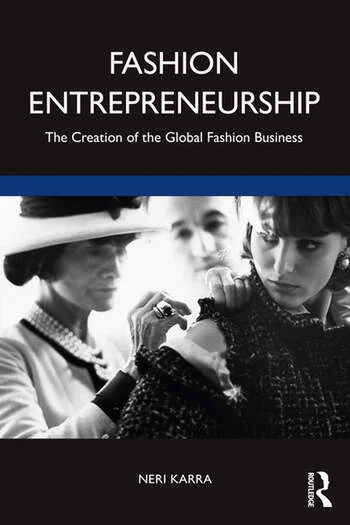
Fashion Entrepreneurship: The Creation of the Global Fashion Business – A Comprehensive Summary
Top 10 Lessons for Students and Professionals
- Balance Creativity with Commercial Viability: Fashion entrepreneurship requires both artistic vision and business acumen. Pure creativity without commercial understanding fails as surely as business focus without aesthetic merit. Successful entrepreneurs like Dior and Armani mastered both.
- Timing Is Critical—Understand Cultural Readiness: The same innovation succeeds or fails based on timing. Society must be ready for change. Study cultural trends, social movements, and consumer psychology to identify when opportunities emerge.
- Build Brand Equity as Your Primary Asset: In fashion, brand value exceeds physical products. Invest in creating distinctive identity, consistent aesthetic, and emotional connections. Brand equity provides sustainable competitive advantage that competitors cannot easily replicate.
- Leverage Licensing and Product Extensions: Learn from Dior and Armani—haute couture or flagship products provide prestige while licensed accessories, perfumes, and secondary lines generate profit. Diversify revenue streams while maintaining brand consistency.
- Networks Create Opportunities and Legitimacy: Relationships with suppliers, manufacturers, retailers, influencers, and customers prove essential. Build authentic networks that provide access to resources, distribution, and social capital. Fashion is relationship-intensive business.
- Adapt Continuously—Dynamic Capabilities Matter: What succeeds today may fail tomorrow. Develop ability to sense environmental changes, seize new opportunities, and reconfigure resources accordingly. Fashion rewards adaptability over rigid adherence to past success.
- Understand Your Target Customer Deeply: Whether dressing empresses (Worth) or teenagers (Quant), successful entrepreneurs intimately understand their customers’ needs, desires, values, and aspirations. Fashion succeeds when it expresses what customers want to communicate about themselves.
- Create Barriers to Imitation: In easily copied industry, build defensibility through brand heritage, craftsmanship excellence, distribution relationships, and authentic storytelling that fast followers cannot replicate.
- Embrace Sustainability as Opportunity, Not Constraint: Environmental and social responsibility increasingly define competitive advantage. Pioneer sustainable materials, ethical production, and circular business models to differentiate and appeal to conscious consumers.
- Technology Enables New Entrepreneurial Models: Digital platforms, social media, e-commerce, and direct-to-consumer approaches lower entry barriers while creating visibility challenges. Master technology to build audiences, manage operations, and deliver experiences that weren’t previously possible.
Introduction: The Business of Fashion
The fashion industry represents a fascinating paradox in modern business. With annual sales exceeding $1.5 trillion globally, it has transformed from an elite supplier of custom garments to a democratized, brand-driven powerhouse. Author Neri Karra, both a fashion entrepreneur and academic, explores how successive generations of entrepreneurs built influential brands that shaped global culture.
The book addresses several intriguing paradoxes: How does an industry based on uniqueness create homogenized culture? Why do brands rooted in 19th-century names remain relevant in an industry defined by constant change? How did fashion empower women as entrepreneurs while simultaneously facing criticism for oppressing them?
Karra defines fashion entrepreneurship as “the capacity to create resource configurations across creative boundaries that are valuable, rare, inimitable, and nonsubstitutable in order to create sustained competitive advantage.” Through three analytical lenses—designer entrepreneurs, market creation, and creativity—the book examines how fashion evolved from local craft to global phenomenon.
The work explores why certain cities (Paris, London, Milan, New York) became fashion capitals, how technology facilitated rapid globalization, and why China will become the largest luxury market by 2025. It demonstrates that fashion mirrors societal changes: as women gained freedom, restrictive corsets gave way to liberating bias-cut dresses. The industry’s growth occurred despite wars and economic crises, proving its resilience and cultural significance.
PART I: Fashion Rising
Chapter 1: The Birth of Fashion Entrepreneurship (1845-1895)
Key Points:
- Charles Frederick Worth founded the first haute couture house in Paris (1858), establishing the designer as artist rather than mere tradesperson
- Worth revolutionized the industry by creating seasonal collections and hosting fashion shows with live models
- He introduced the concept of the designer label, signing his creations and building brand recognition
- The invention of the sewing machine and synthetic dyes democratized fashion production
- Department stores emerged as new retail channels, making fashion accessible beyond aristocracy
The modern fashion business began when Charles Worth transformed dressmaking from anonymous craft to branded artistry. Born in England in 1825, Worth moved to Paris and worked at textile merchants before opening his own house. His innovations were revolutionary: rather than simply fulfilling client requests, he designed collections and dictated trends. He dressed Empress Eugénie of France, leveraging her influence to establish fashion’s social power.
Worth’s business model introduced several entrepreneurial capabilities that remain relevant today. He understood timing and cultural trends, recognizing that the Second Empire’s wealth created demand for luxury fashion. He possessed aesthetic vision, translating historical costume elements into modern silhouettes. His networking abilities secured aristocratic patronage that provided both revenue and marketing through social visibility.
The chapter demonstrates how technological innovations—particularly the sewing machine (1846) and aniline dyes (1856)—enabled scale. Worth could produce more garments faster, while new colors expanded creative possibilities. The rise of fashion magazines and photography disseminated trends globally, creating international demand.
Worth established Paris as fashion’s capital by institutionalizing haute couture’s practices: made-to-measure craftsmanship, seasonal presentations, and the designer’s artistic authority. His legacy proved that fashion entrepreneurship required balancing creativity with commercial acumen, understanding that cultural capital translated to economic value.
Chapter 2: Fashion, Art, and Beauty (1895-1914)
Key Points:
- Paul Poiret liberated women from corsets, creating flowing silhouettes inspired by Eastern aesthetics
- The Art Nouveau and Orientalism movements influenced fashion design profoundly
- Poiret pioneered fashion marketing through theatrical presentations, perfume licensing, and interior design
- Mariano Fortuny and Jacques Doucet demonstrated how fashion intersected with fine art collecting
- The period established fashion as legitimate art form, not merely decorative craft
The Belle Époque witnessed fashion’s artistic elevation. Paul Poiret, trained under Worth and Doucet, rejected Victorian constraint for Oriental-inspired liberation. His 1906 collections featured high-waisted Empire lines that eliminated corsets, allowing natural movement. Poiret understood that fashion expressed cultural zeitgeist—his designs reflected growing women’s emancipation and fascination with exotic cultures following increased global travel.
Poiret’s entrepreneurial innovations extended beyond garments. He launched perfumes (1911), created theatrical fashion presentations called “The Thousand and Second Night” party (1911), and collaborated with artists like Raoul Dufy. His brand extension strategy proved that fashion could encompass lifestyle—a lesson luxury conglomerates later perfected.
Mariano Fortuny represented fashion’s intersection with fine art. His pleated silk Delphos gowns (1907) were timeless sculptures inspired by ancient Greek dress. Unlike Poiret’s seasonal trends, Fortuny created enduring pieces that transcended fashion cycles, demonstrating an alternative business model based on craftsmanship and permanence rather than planned obsolescence.
The chapter illustrates how fashion entrepreneurs required cultural literacy—understanding art movements, historical references, and societal shifts. They needed innovation capability to translate artistic concepts into wearable garments and marketing vision to position fashion as cultural expression rather than mere commodity.
PART II: Fashion Diffusion
Chapter 3: Fashion Amid War and Depression (1914-1945)
Key Points:
- Coco Chanel revolutionized women’s fashion with comfortable, practical designs using jersey fabric
- World War I necessitated functional clothing as women entered workforce, permanently changing fashion
- The 1920s flapper style reflected post-war liberation and jazz age hedonism
- Elsa Schiaparelli challenged Chanel with Surrealist-inspired, theatrical designs
- The Great Depression forced designers to adapt pricing while maintaining luxury positioning
The interwar period brought radical transformation. World War I mobilized women into factories and offices, rendering elaborate pre-war fashions impractical. Coco Chanel, born into poverty, understood working women’s needs. She introduced jersey—previously used for underwear—as fashionable fabric, creating simple, comfortable silhouettes. Her little black dress (1926) democratized elegance, proving luxury could be understated.
Chanel’s entrepreneurial genius lay in identifying underserved markets. While others dressed aristocrats, she targeted the emerging modern woman—active, independent, and employed. Her designs expressed this customer’s values: practicality without sacrificing elegance. She expanded into perfume (Chanel No. 5, 1921), jewelry, and accessories, demonstrating vertical integration and brand extension.
The 1920s flapper era—short skirts, dropped waists, bobbed hair—reflected women’s newfound freedoms: voting rights, economic independence, social liberation. Fashion both reflected and accelerated cultural change. Designers like Jean Patou and Madeleine Vionnet created bias-cut dresses that emphasized natural bodies rather than artificial shapes, continuing the liberation Poiret began.
Elsa Schiaparelli provided Chanel’s antithesis. Where Chanel favored minimalism, Schiaparelli embraced Surrealism, collaborating with Salvador Dalí on shocking pink lobster dresses and shoe-shaped hats. Her theatrical approach proved fashion could be art, humor, and social commentary simultaneously.
The 1930s Depression challenged luxury businesses. Designers adapted through tiered pricing strategies—maintaining haute couture prestige while offering more accessible lines. Some, like Hattie Carnegie in America, built empires on ready-to-wear, proving fashion entrepreneurship wasn’t exclusively Parisian.
Chapter 4: The Golden Age of Haute Couture (1945-1959)
Key Points:
- Christian Dior’s “New Look” (1947) restored femininity and luxury after wartime austerity
- Post-war economic boom created unprecedented demand for haute couture
- Cristóbal Balenciaga achieved unparalleled technical mastery, treating fashion as sculpture
- American designers like Claire McCardell developed sportswear as distinctly American contribution
- The period established licensing and perfume as crucial revenue streams beyond garments
Post-war prosperity fueled haute couture’s golden age. Christian Dior’s 1947 “New Look”—nipped waists, full skirts requiring yards of fabric—rejected wartime rationing for unabashed luxury. Critics deemed it wasteful; women embraced it enthusiastically. Dior understood psychological needs: after war’s devastation, people craved beauty, optimism, and normalcy. His designs provided emotional restoration alongside physical adornment.
Dior’s business acumen matched his creative vision. He aggressively licensed his name for stockings, ties, accessories, and perfume. By his 1957 death, licensing generated more revenue than couture. This business model innovation proved that designer names held independent value—people would pay premiums for branded products even without haute couture’s craftsmanship.
Cristóbal Balenciaga represented couture’s apex. His architectural approach—cutting fabric in three dimensions, treating garments as sculpture—achieved technical perfection. Unlike contemporaries who sketched then delegated construction, Balenciaga personally draped, cut, and sewed. His barrel-line coats and chemise dresses anticipated 1960s minimalism while maintaining haute couture’s standards.
The chapter highlights generational continuity—Dior trained Yves Saint Laurent; Balenciaga influenced numerous designers. Fashion knowledge transferred through apprenticeship, creating lineages that preserved craft while encouraging innovation.
American sportswear emerged as distinct tradition. Claire McCardell created practical, comfortable clothing using mass-production techniques. Her “popover dress” (1942) sold 75,000 units—unprecedented for designer fashion. This proved American pragmatism could compete with Parisian artistry, establishing geographic diversification in fashion entrepreneurship.
Chapter 5: The Changing Face of the Fashion Business (1960s Onward)
Key Points:
- Yves Saint Laurent democratized haute couture through ready-to-wear (Rive Gauche, 1966)
- Youth culture and street fashion challenged traditional top-down design authority
- Mary Quant and the London scene made fashion youthful, affordable, and rebellious
- Giorgio Armani redefined power dressing and built business empire through strategic licensing
- Globalization and conglomeration transformed fashion from family businesses to corporate entities
The 1960s youth revolution upended fashion’s hierarchy. Previously, designers dictated to passive consumers; now, street style influenced haute couture. Yves Saint Laurent recognized this shift. His Mondrian dresses (1965) referenced art while anticipating pop culture. More significantly, his Rive Gauche ready-to-wear boutiques (1966) made designer fashion accessible, acknowledging that haute couture’s labor-intensive model couldn’t sustain growth.
Mary Quant in London exemplified entrepreneurial opportunism. She identified that existing fashion ignored young people with disposable income. Her miniskirts, colorful tights, and affordable prices captured teenage rebellion against conservative parents. Quant understood target market segmentation—not all customers wanted haute couture sophistication; some sought youthful rebellion.
The period saw business model evolution. Designers increasingly relied on ready-to-wear, accessories, perfume, and licensing rather than made-to-measure garments. Giorgio Armani built an empire through strategic licensing—eyewear, watches, hotels—while maintaining creative control. His unstructured blazers and neutral palette defined 1980s power dressing, proving fashion could express professional authority, not just social status or artistic vision.
Conglomeration emerged as dominant trend. LVMH (formed 1987) and other luxury groups acquired heritage brands, providing capital for global expansion while preserving creative autonomy. This transformation from family businesses to corporate entities raised questions: Could fashion maintain authenticity under corporate ownership? Could creativity coexist with shareholder demands?
Japanese designers like Kenzo Takada and Issey Miyake internationalized fashion, proving Paris’ supremacy wasn’t absolute. Their Eastern aesthetic sensibilities enriched Western fashion, demonstrating cross-cultural entrepreneurship. Technology, particularly the internet, accelerated globalization—trends spread instantaneously, and e-commerce enabled direct-to-consumer sales.
PART III: Fashion Entrepreneurship: Theory and Practice
Chapter 6: Building the Fashion Firm: Entrepreneurial Capabilities for Fashion Business Success
Key Points:
- Aesthetic capability: ability to create desirable designs that resonate culturally
- Temporal capability: understanding when society is ready for innovation
- Networking capability: building relationships with suppliers, manufacturers, retailers, influencers
- Brand-building capability: creating distinctive identity that commands loyalty and premium pricing
- Resource orchestration: efficiently managing materials, labor, capital, and distribution
This analytical chapter synthesizes lessons from historical examples into framework for fashion entrepreneurship. Karra identifies five critical capabilities distinguishing successful fashion entrepreneurs from failures.
Aesthetic capability involves more than creating beautiful objects. Entrepreneurs must understand cultural codes—what signifies luxury, rebellion, sophistication, or accessibility—and translate these into garments. Worth’s historical references, Chanel’s minimalism, and Schiaparelli’s surrealism each demonstrated aesthetic capability differently, proving no single approach dominates.
Temporal capability addresses timing. Yves Saint Laurent’s premature 1960 collection (too youthful for conservative Dior customers) failed where his 1966 ready-to-wear succeeded because society had evolved. Entrepreneurs must sense when cultural shifts create opportunities, recognizing that too early fails as surely as too late.
Networking capability creates competitive advantage through relationships. Worth cultivated Empress Eugénie; Poiret collaborated with artists; modern designers partner with celebrities, influencers, and retailers. These networks provide legitimacy, visibility, and distribution access that pure creative talent cannot achieve alone.
Brand-building capability transforms names into valuable assets. Dior, Chanel, and Armani became brands whose value exceeded individual products. Successful entrepreneurs create consistent brand identities—through logos, aesthetics, values, and customer experience—that generate emotional connections and justify premium pricing.
Resource orchestration involves efficiently managing production, distribution, and finance. Fashion businesses face unique challenges: seasonal inventory, trend unpredictability, complex global supply chains. Entrepreneurs must balance creativity with operational excellence, artistic vision with commercial viability.
Chapter 7: The Fashion Entrepreneurship Model: Dynamics Creating Sustainable Competitive Advantage
Key Points:
- Fashion businesses require balancing creativity and commerce, art and business
- Cultural capital converts to economic capital through brand equity
- Dynamic capabilities allow adaptation to changing markets, technologies, consumer preferences
- First-mover advantages exist but aren’t sustainable without continuous innovation
- Sustainable competitive advantage requires barriers to imitation: brand heritage, craftsmanship, distribution networks
This chapter presents Karra’s theoretical model explaining how fashion entrepreneurship creates sustained success. Traditional business strategy emphasizes efficiency and cost reduction; fashion requires balancing these with aesthetic innovation and brand mystique.
The model identifies cultural capital as fashion’s unique asset. Unlike manufacturing businesses where competitive advantage comes from production efficiency, fashion derives value from intangible qualities: heritage, prestige, artistic credibility, social cachet. Entrepreneurs convert cultural capital to economic capital by building brands that consumers perceive as valuable beyond functional utility.
Dynamic capabilities—the ability to reconfigure resources and strategies—prove essential given fashion’s rapid change. What succeeds one season may fail the next. Entrepreneurs like Chanel repeatedly reinvented their businesses (from millinery to fashion to perfume to ready-to-wear), demonstrating adaptability. In contrast, designers who couldn’t evolve—Poiret’s decline after 1920s illustrated this—lost relevance.
The chapter addresses barriers to imitation. Fashion faces constant copying—fast fashion retailers reproduce runway designs within weeks. Successful brands create defensibility through: (1) heritage and authenticity that newcomers cannot replicate, (2) craftsmanship requiring rare skills, (3) distribution relationships, (4) brand equity built over decades.
First-mover advantages exist but require reinforcement. Worth created haute couture; others followed and sometimes surpassed him. Being first provides visibility but not guaranteed sustained dominance. Continuous innovation, brand building, and capability development transform temporary advantages into enduring positions.
Chapter 8: Fashion Business Models: Entrepreneurial Drivers, Opportunities, and Challenges
Key Points:
- Haute couture model: loss leader providing prestige while licensing/accessories generate profit
- Ready-to-wear model: balancing accessibility with designer cachet
- Fast fashion model: rapid trend replication at low prices, raising ethical concerns
- Direct-to-consumer/digital models: technology enables new entrepreneurial opportunities
- Sustainability imperative: environmental and social responsibility becoming competitive requirements
The final analytical chapter examines diverse business models within fashion entrepreneurship, each with distinct drivers, opportunities, and challenges.
Haute couture remains prestigious but economically marginal. Houses maintain couture ateliers despite losses because runway shows generate publicity and brand prestige that drive profitable accessories, perfume, and ready-to-wear sales. This model requires substantial capital to sustain unprofitable operations while building brand equity—explaining why conglomerates dominate.
Ready-to-wear emerged as solution to haute couture’s limitations. By standardizing sizes and using industrial production, designers accessed larger markets while maintaining creative control. However, ready-to-wear faces challenges: it must balance accessibility (affordable prices, available inventory) with exclusivity (maintaining luxury positioning). Successful brands manage this tension through tiered product lines and careful distribution.
Fast fashion—exemplified by Zara, H&M—represents democratization’s extreme. These businesses rapidly reproduce trends at minimal prices, making fashion accessible to everyone. However, this model faces criticism for environmental damage (textile waste, pollution), labor exploitation, and cultural appropriation. Karra notes this raises questions about fashion entrepreneurship’s social responsibility.
Digital/direct-to-consumer models leverage technology to bypass traditional retail. Instagram enables designers to build audiences directly; e-commerce eliminates intermediaries. This democratizes entrepreneurship—newcomers can launch without boutique relationships—while challenging established players’ distribution advantages. However, digital saturation creates visibility challenges; standing out requires new marketing capabilities.
Sustainability increasingly defines competitive advantage. Consumers, especially younger generations, demand environmental and social responsibility. Entrepreneurs must innovate in materials (organic, recycled), production (reducing waste, fair labor), and business models (rental, resale). Sustainability presents both constraint and opportunity—those solving it first gain advantage.
Conclusion: The Dream Makers
The conclusion reflects on fashion entrepreneurship’s evolution and future. Despite enormous changes—technology, globalization, democratization—fundamental principles remain constant. Success still requires balancing creativity with commerce, understanding cultural zeitgeist, building brands that resonate emotionally, and adapting to constant change.
Karra emphasizes fashion’s unique position as both art and business, culture and commerce. This duality creates tension but also opportunity. Fashion entrepreneurs aren’t purely artists or business people but hybrids who navigate both worlds. They create objects of beauty while building profitable enterprises, express individual vision while anticipating collective desires, honor tradition while innovating constantly.
The book ends by noting fashion’s continuing paradoxes: it democratizes while creating exclusivity, preaches individuality while creating conformity, celebrates the new while revering the old, empowers while potentially oppressing, provides frivolous pleasure while expressing deep cultural meaning. Understanding these paradoxes isn’t merely academic—it’s essential for anyone seeking to succeed in fashion entrepreneurship.
Current challenges—sustainability, digital transformation, shifting luxury definitions, global competition—require new solutions. However, the entrepreneurial capabilities identified throughout history remain relevant: aesthetic vision, cultural intelligence, networking skill, brand building, resource orchestration, and adaptability. Future fashion entrepreneurs will create the next chapter in this ongoing story of creativity, commerce, and cultural influence.
Top 10 Lessons for Students and Professionals
- Balance Creativity with Commercial Viability: Fashion entrepreneurship requires both artistic vision and business acumen. Pure creativity without commercial understanding fails as surely as business focus without aesthetic merit. Successful entrepreneurs like Dior and Armani mastered both.
- Timing Is Critical—Understand Cultural Readiness: The same innovation succeeds or fails based on timing. Society must be ready for change. Study cultural trends, social movements, and consumer psychology to identify when opportunities emerge.
- Build Brand Equity as Your Primary Asset: In fashion, brand value exceeds physical products. Invest in creating distinctive identity, consistent aesthetic, and emotional connections. Brand equity provides sustainable competitive advantage that competitors cannot easily replicate.
- Leverage Licensing and Product Extensions: Learn from Dior and Armani—haute couture or flagship products provide prestige while licensed accessories, perfumes, and secondary lines generate profit. Diversify revenue streams while maintaining brand consistency.
- Networks Create Opportunities and Legitimacy: Relationships with suppliers, manufacturers, retailers, influencers, and customers prove essential. Build authentic networks that provide access to resources, distribution, and social capital. Fashion is relationship-intensive business.
- Adapt Continuously—Dynamic Capabilities Matter: What succeeds today may fail tomorrow. Develop ability to sense environmental changes, seize new opportunities, and reconfigure resources accordingly. Fashion rewards adaptability over rigid adherence to past success.
- Understand Your Target Customer Deeply: Whether dressing empresses (Worth) or teenagers (Quant), successful entrepreneurs intimately understand their customers’ needs, desires, values, and aspirations. Fashion succeeds when it expresses what customers want to communicate about themselves.
- Create Barriers to Imitation: In easily copied industry, build defensibility through brand heritage, craftsmanship excellence, distribution relationships, and authentic storytelling that fast followers cannot replicate.
- Embrace Sustainability as Opportunity, Not Constraint: Environmental and social responsibility increasingly define competitive advantage. Pioneer sustainable materials, ethical production, and circular business models to differentiate and appeal to conscious consumers.
- Technology Enables New Entrepreneurial Models: Digital platforms, social media, e-commerce, and direct-to-consumer approaches lower entry barriers while creating visibility challenges. Master technology to build audiences, manage operations, and deliver experiences that weren’t previously possible.